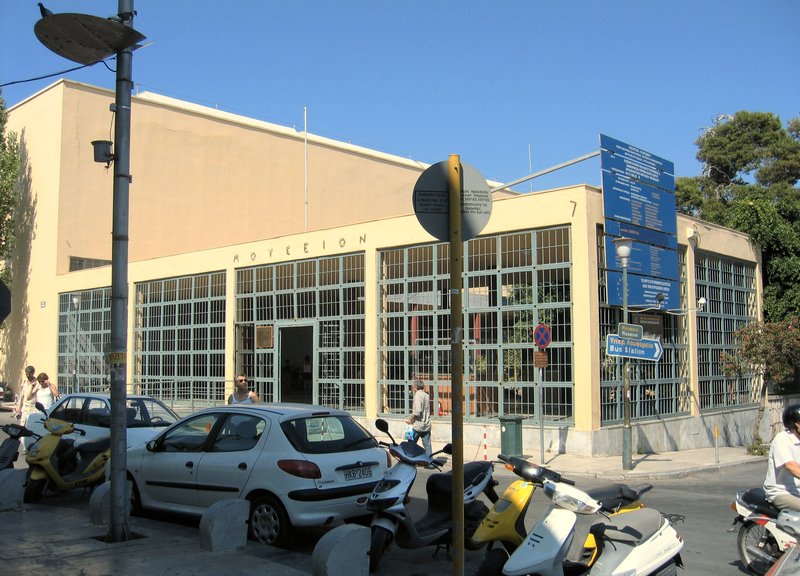
From Hotel: 🚕 12 min → Archaeological Museum of Heraklion
The most complete Minoan collection in the world: original throne-room frescoes from Knossos, the undeciphered Phaistos Disc, the gold Minoan Bee Pendant, and 3,500 years of Cretan Bronze Age material culture across 28 galleries.
🏛️ Daily 8:00am - 8:00pm
⏰ ~2 hr
⚠️ Nov–Mar: shorter hours
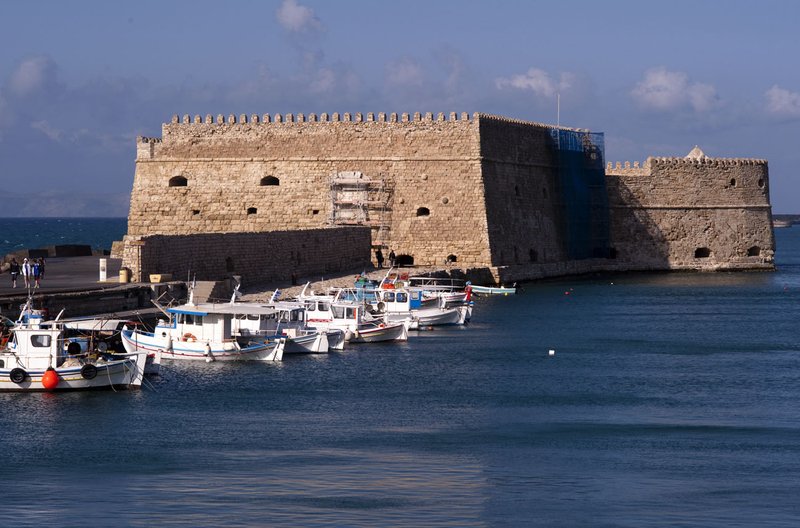
🚶 6 min · 🚕 2 min → Koules Fortress
A 16th-century Venetian sea fort guarding the harbor entrance, its three carved stone lions of St. Mark still facing the Aegean; 26 barrel-vaulted rooms once held 1,000 troops, and the roof terrace is the best elevated viewpoint over the old city.
🏛️ Wednesday - Monday 8:30am - 7:30pm
⏰ ~45 min
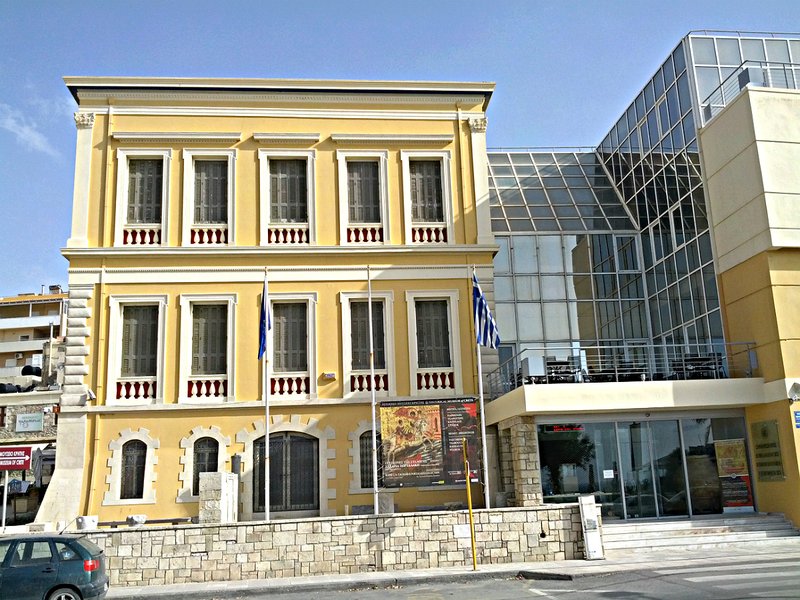
🚶 4 min · 🚕 2 min → Historical Museum of Crete
From Byzantine mosaics to the WWII Battle of Crete: El Greco's only two surviving Cretan paintings, a massive scale model of 17th-century Venetian Heraklion, and a fully installed traditional rural Cretan interior share space with Resistance-era documents and artifacts.
🏛️ Monday - Saturday 9:00am - 5:00pm
⏰ ~1 hr
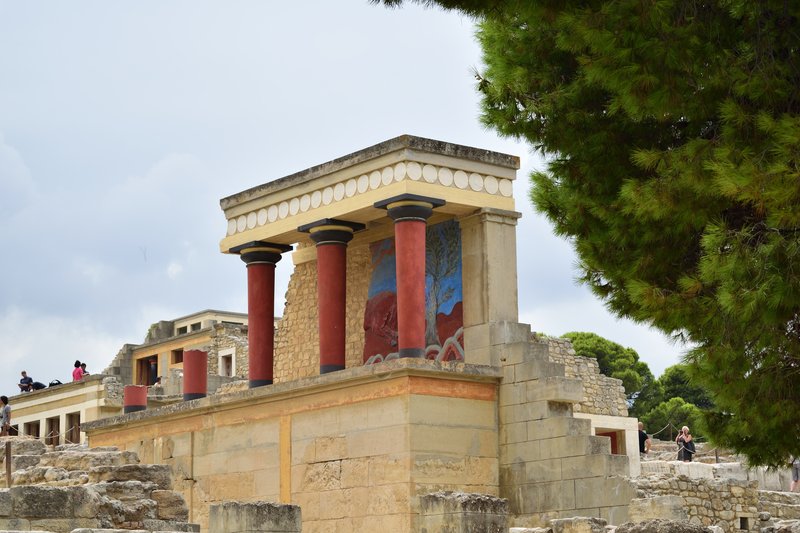
🚕 17 min → Palace of Knossos
Europe's oldest city-palace, built around 1900 BC and expanded to cover five acres; the reconstructed North Entrance, Throne Room, and Grand Staircase frame frescoed halls that are the oldest monumental pictorial art in Europe.
🏛️ Daily 8:00am - 8:00pm
⏰ ~2 hr
⚠️ Nov–Mar: shorter hours
🚶 5 min · 🚕 3 min → hotel
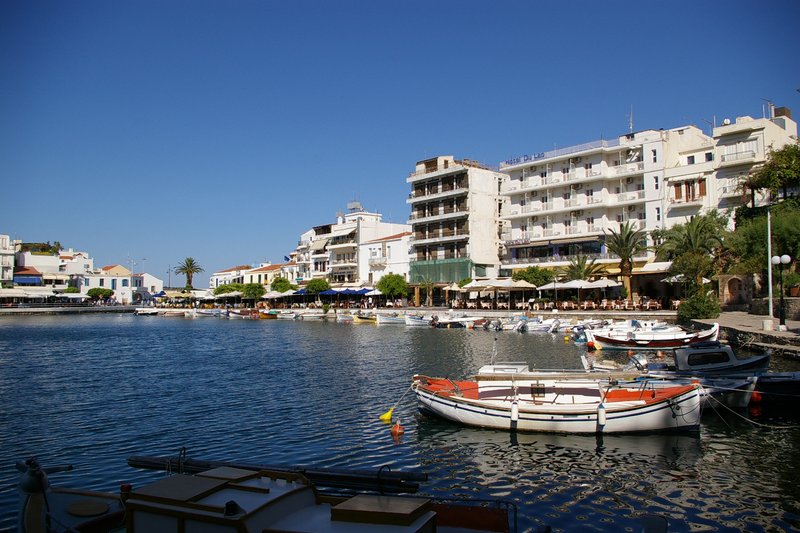
From Hotel: 🚕 35 min → Lake Voulismeni
A circular freshwater lake 64m deep at the center of Agios Nikolaos, connected to the sea by a canal cut in 1870; legend says Athena bathed here; the tamarisk-lined promenade ringed by cafes is the natural midday stop between Malia and Spinalonga.
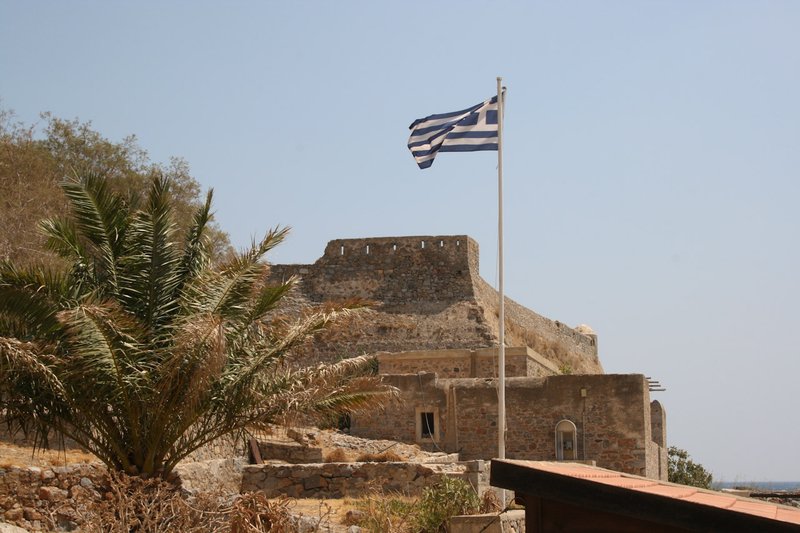
🚕 28 min → Spinalonga Island
A Venetian island fortress in the Gulf of Elounda that functioned as one of Europe's last active leper colonies until 1957; the entire walled settlement — houses, church, market streets, cafe — survives intact, making it the second most-visited archaeological site on Crete.
🏛️ Daily 8:00am - 8:00pm
⏰ ~1.5 hr
⚠️ Apr–Oct season only
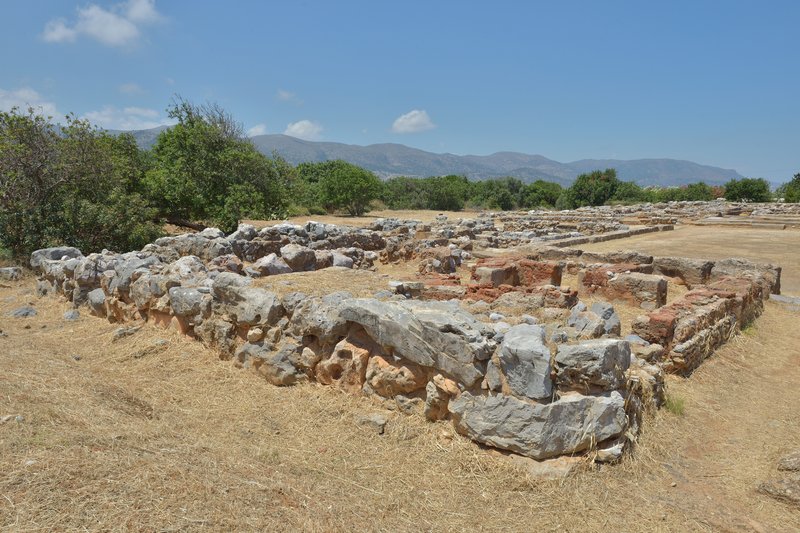
🚕 1h 13min → Palace of Malia
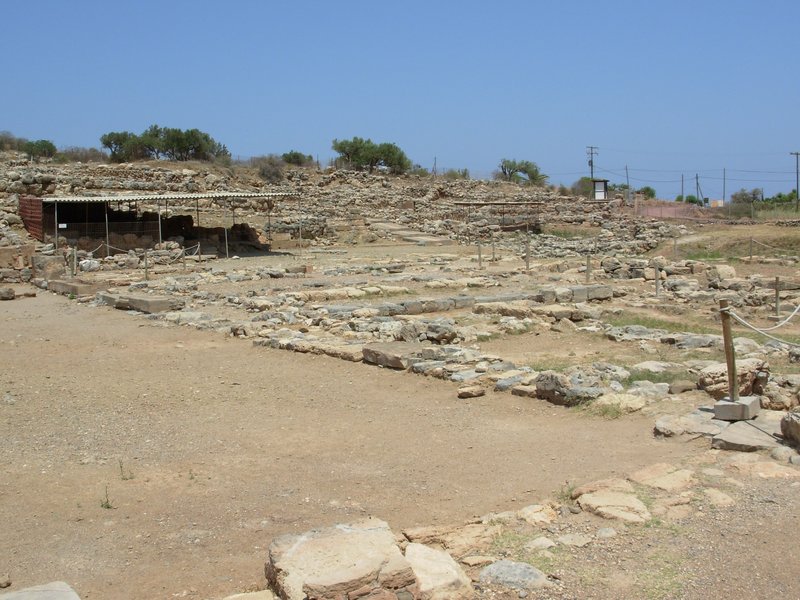
The third-largest Minoan palace at 7,500 m², excavated but not reconstructed; the circular Kernos stone used in harvest rituals and the circular koulouras grain-storage pits are the finest intact Minoan ceremonial objects on the island.
🏛️ Daily 8:00am - 8:00pm
⏰ ~1 hr
⚠️ Nov–Mar: closed Tuesday
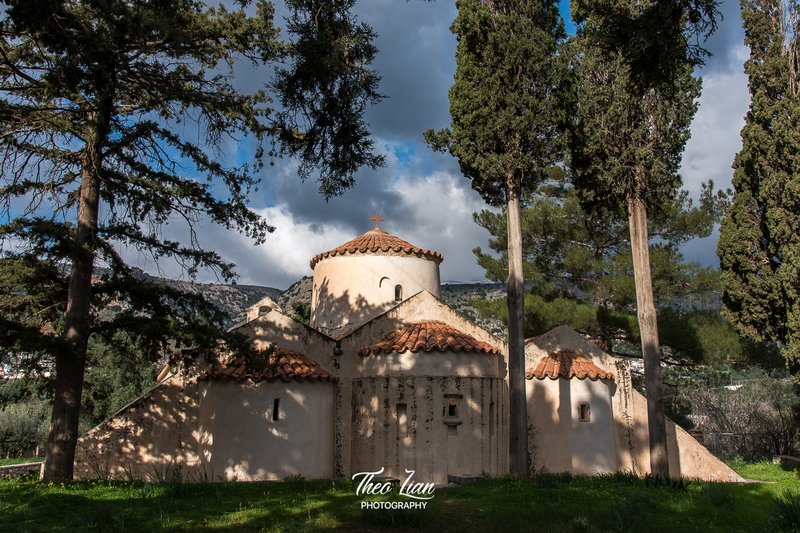
🚶 15 min · 🚕 5 min → Church of Panagia Kera
A 13th-century three-aisled Byzantine church in the hills above Kritsa; every arch, vault, and apse is covered in a complete cycle of 14th-century frescoes painted 1360–1410 — the most comprehensive and best-preserved Byzantine iconographic programme on Crete.
🏛️ Daily 8:30am - 3:00pm
⏰ ~30 min
🚕 1h 10min → hotel
From Hotel: 🚕 50 min → Gortyna
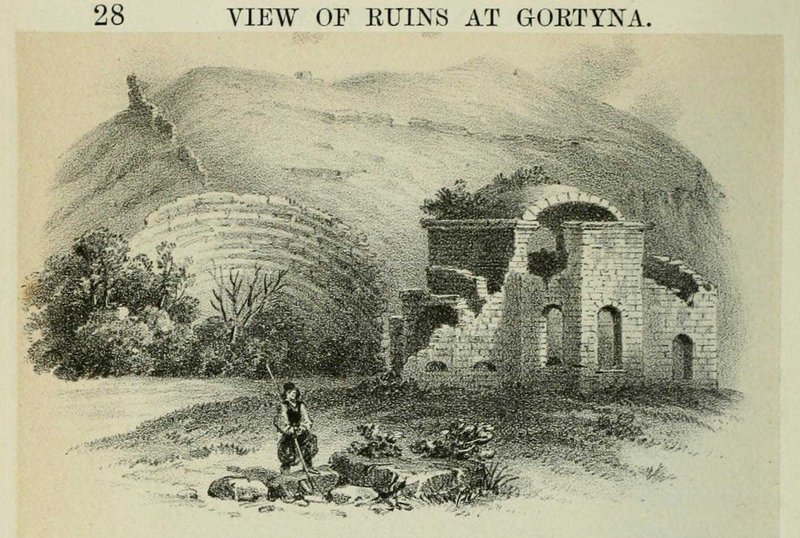
Roman capital of Crete and Cyrenaica Province; the Odeon shelters 12 limestone blocks carved with the Code of Gortyna · dated 480 BC — the oldest and most complete Greek legal text in existence, governing property, marriage, and inheritance in 17,000 incised characters.
🏛️ Daily 8:00am - 8:00pm
⏰ ~1 hr
⚠️ Nov–Mar: shorter hours
🚕 20 min → Phaistos
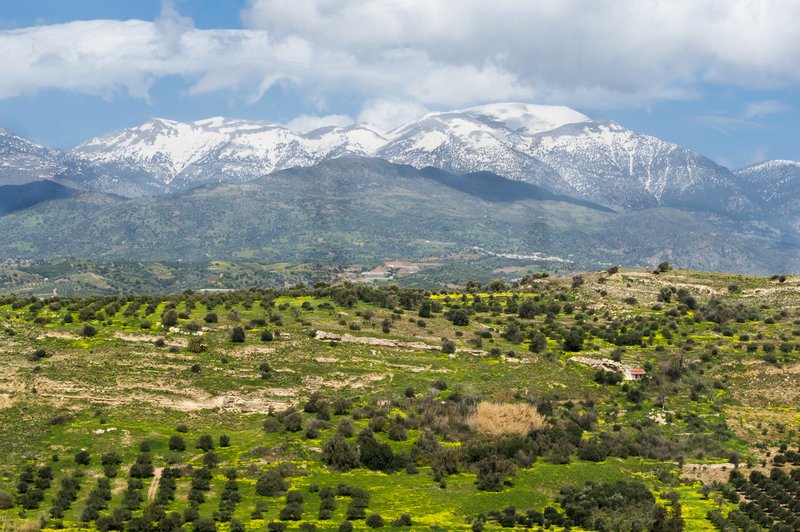
The second-largest Minoan palace at 8,400 m², sited on a ridge commanding the whole of the Mesara Plain and Mount Psiloritis; entirely unrestored, it gives the clearest picture of original Minoan stonework — and is the source of the Phaistos Disc, whose script has never been deciphered.
🏛️ Daily 8:00am - 8:00pm
⏰ ~1.5 hr
⚠️ Nov–Mar: shorter hours
🚕 5 min → Agia Triada
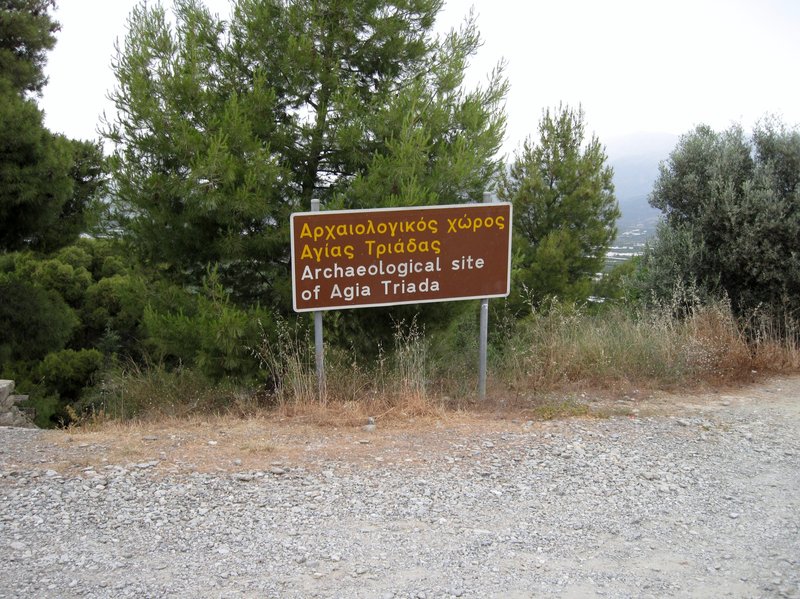
A Minoan royal villa 3km from Phaistos, built around 1550 BC; the only Minoan site with a colonnaded stoa, and the source of the Harvester Vase and Chieftain Cup — two of the finest Bronze Age relief carvings surviving anywhere — both now in the Archaeological Museum.
🏛️ Daily 8:00am - 3:30pm
⏰ ~1 hr
🚕 15 min → Matala
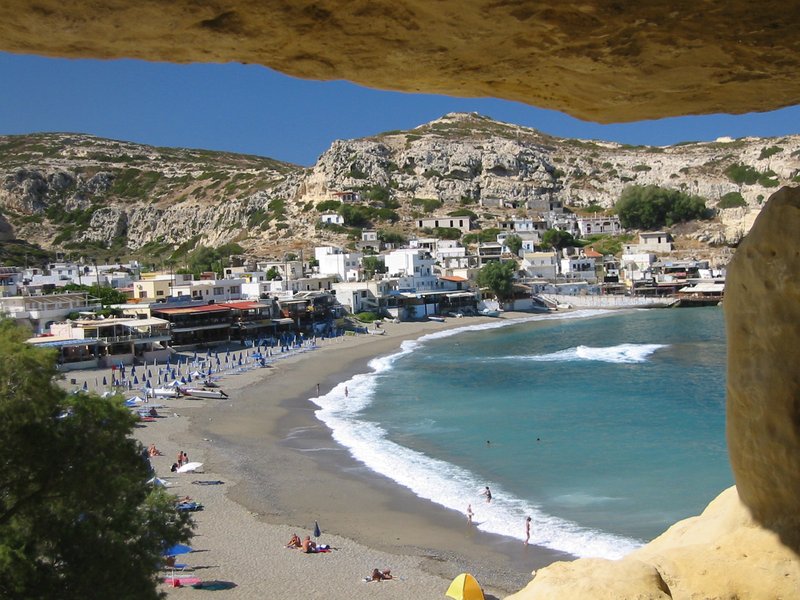
Neolithic rock-cut tombs in a red sandstone cliff above a turquoise bay — used as Roman cemetery chambers, then as free accommodation by an international hippie commune in the 1960s; Joni Mitchell stayed here and wrote "Carey" · ticketed cave access is above the beach.
🏛️ Daily 10:00am - 7:00pm
⏰ ~1.5 hr
⚠️ Apr–Oct season only
🚕 1h 15min → hotel
From Hotel: 🚕 1h 30min → Rethymno Old Town
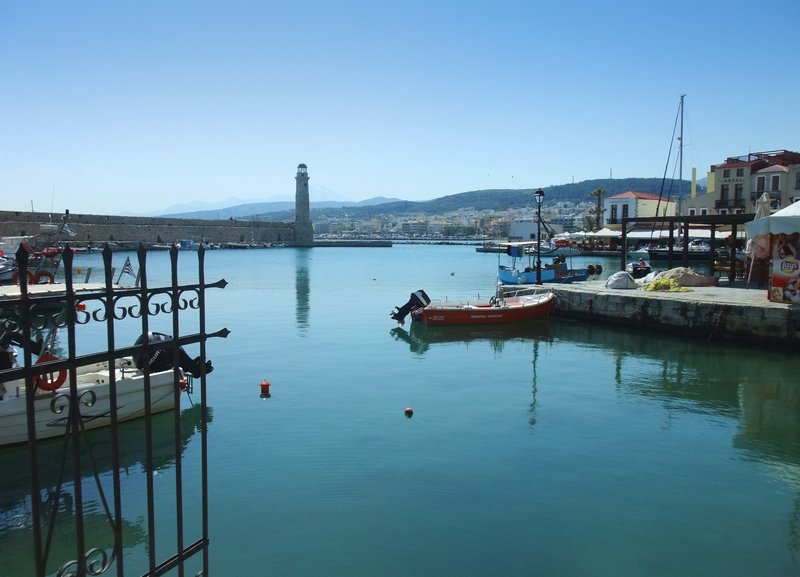
A Venetian harbor town that passed to the Ottomans in 1646 and kept both layers — narrow alleys of Venetian loggia doorways and the three-arched Rimondi Fountain give way to minarets and a hammam. The lighthouse at the harbor entrance stands on an Ottoman tower base; the harbor is ringed by pastel neoclassical facades.
🚶 10 min · 🚕 5 min → Fortezza of Rethymno
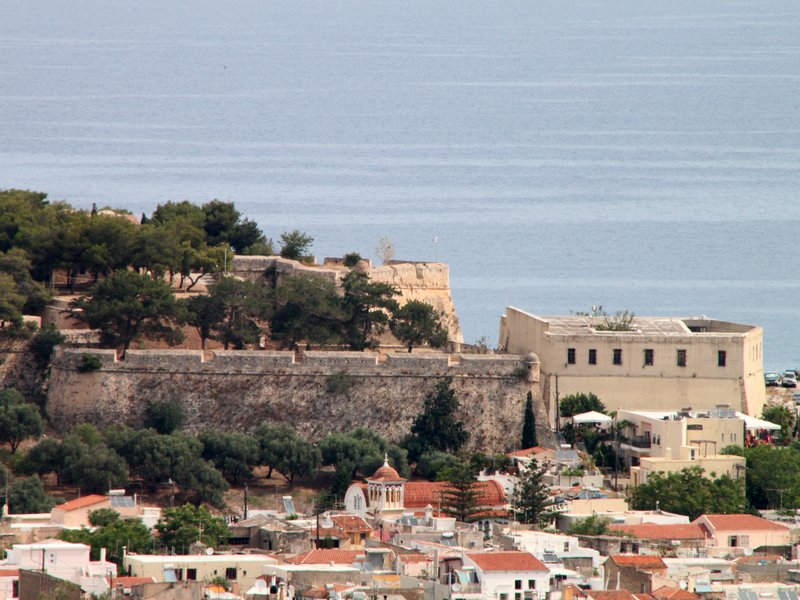
The largest Venetian fortress in Crete, built in 1573 on a 60-metre promontory above the harbor after repeated Ottoman raids. Within the 12-hectare enclosure are intact ramparts, four bastions, the domed Ibrahim Han Mosque — formerly the Venetian cathedral — and sweeping views over the city and the Cretan Sea.
🏛️ Daily 8:00am - 7:00pm
⏰ ~1 hr 30 min
⚠️ Nov–Apr: 10:00am - 3:00pm · Stone surfaces are uneven — wear closed shoes
🚕 50 min → Preveli Beach
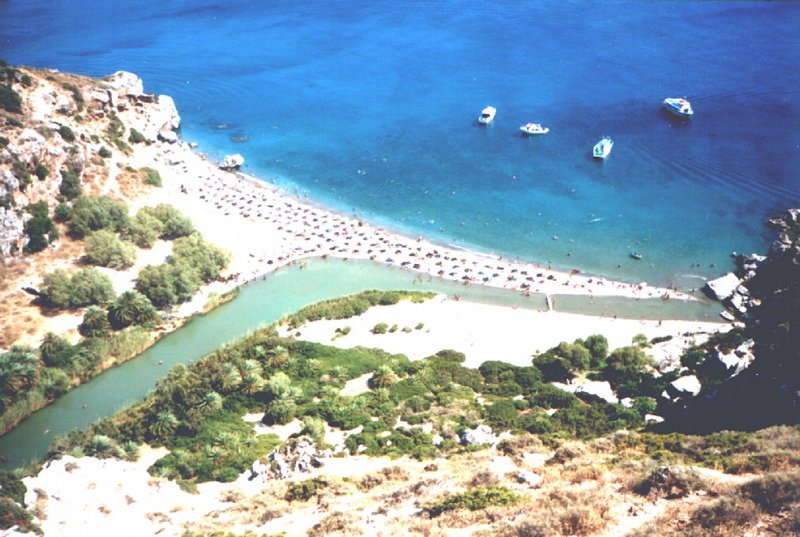
A freshwater river cuts a palm-lined gorge through the Kourtaliotiko Canyon before reaching a sheltered lagoon beach — one of the most photographed in Greece. The riverside Phoenix theophrasti palms are native, not planted; the river stays cool year-round and is swimmable behind the beach where it pools in the gorge.
🏛️ Open 24/7
⏰ ~2 hr
⚠️ No shade on the 250-step descent path to the beach · Limited parking in peak season · Bring water and sun protection
🚕 1h 45min → hotel
From Hotel: 🚕 2h 30min → Toplou Monastery
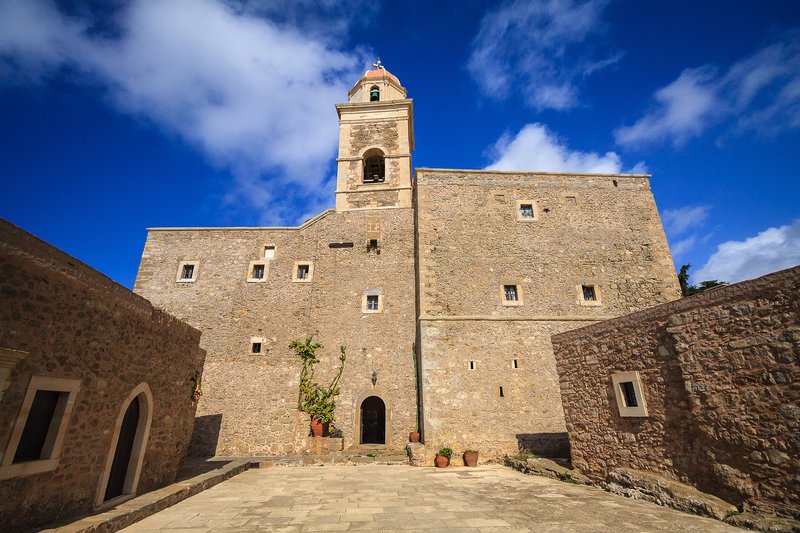
A fortress-monastery founded in the 15th century on the rocky plateau of the Sitia Mountains, with walls thick enough to repel pirate raids. Its treasury holds Ioannis Kornaros' 1770 icon "Great Art Thou, O Lord" — a 61-scene masterwork considered the most complex Byzantine icon in Crete.
🏛️ Daily 9:00am - 1:00pm · 3:00pm - 6:00pm
⏰ ~1 hr
⚠️ Entry ticket at the gate · Modest dress required — covered shoulders and knees · Photography inside the church not permitted
🚕 20 min → Vai Beach
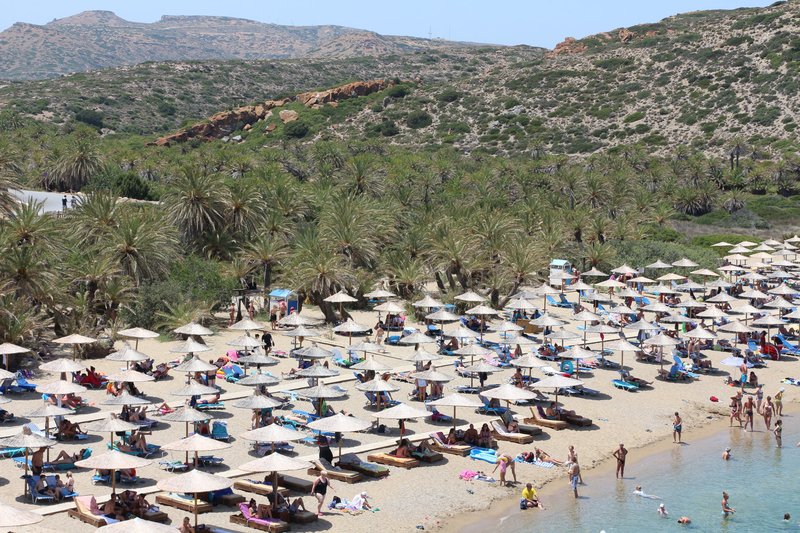
Europe's only wild date palm forest — Phoenix theophrasti — protected since 1974 as a biosphere reserve. Some 5,000 trees reaching 15 metres frame a crescent of golden sand at the eastern tip of Crete; the palms predate human planting, the grove having formed naturally over millennia through Minoan-era seabird migration.
🏛️ Open 24/7
⏰ ~2 hr
⚠️ Crowded July–August · Sunbeds and umbrellas available on beach · Snack bar on site
🚕 45 min → Kato Zakros Palace
The fourth great Minoan palace, built around 1900 BC at the eastern end of the Gorge of the Dead — uniquely unlooted because the city was buried and never rediscovered in antiquity. State archives, temple treasuries, and Cypriot copper ingots were found intact where they had been left 3,500 years earlier.
🏛️ Daily 8:00am - 8:00pm
⏰ ~1 hr 30 min
⚠️ Entry ticket at the gate · Closed Tuesdays Oct–Apr · The Gorge of the Dead, a 3km gorge walk, begins at the palace — bring water · Apr–Oct for full site access
🚕 2h 30min → hotel
Crete is the place where Europe began. Before Athens had its Acropolis and before Rome had its Forum, the Minoans on this island were building multi-story palaces with indoor plumbing, painting dolphins and bull-leapers on their walls, and running a maritime trade network that stretched from Egypt to Anatolia. The Palace of Knossos was the largest building in the Aegean world for a thousand years.
What makes Crete different from most ancient-world destinations is that the Minoans left behind no deciphered written language — only Linear A, which remains unsolved — so everything we know about them comes from objects and spaces. The frescoes in the Archaeological Museum are doing a lot of narrative work. Study them before you walk Knossos, and the reconstructed walls will have context: you will recognize the Procession Fresco, the Prince of the Lilies, the Ladies in Blue. The museum and the palace are one experience in two buildings.
Day 2 builds a different picture. Malia is Knossos without the crowds or the reconstruction — raw Bronze Age stone in the morning sun, the sea visible from the palace floor. Spinalonga is the most emotionally charged site on the island: not ancient but recent, a functioning settlement into living memory, its abandoned cafes and shut pharmacy more unsettling than any ruin. The Church of Panagia Kera in Kritsa is the corrective — intimate, cool, dark, with 14th-century faces looking down from every surface.
Day 3 moves to the south and to a completely different civilization. Gortyna, Phaistos, and Agia Triada are within a few kilometers of each other in the Mesara Plain, and visiting them in sequence makes the chronology unusually clear: Bronze Age Minoan palace at Phaistos, later Minoan villa at Agia Triada, Roman provincial capital at Gortyna — all on the same flat agricultural plain that has been farmed continuously for five thousand years. Matala is the dessert: a beach with a prehistoric past, a Roman past, and a counterculture legend, under a cliff the Cretans have been cutting rooms into since the Neolithic.