From Hotel: 🚶 10 min · 🚕 5 min → Delos Archaeological Site
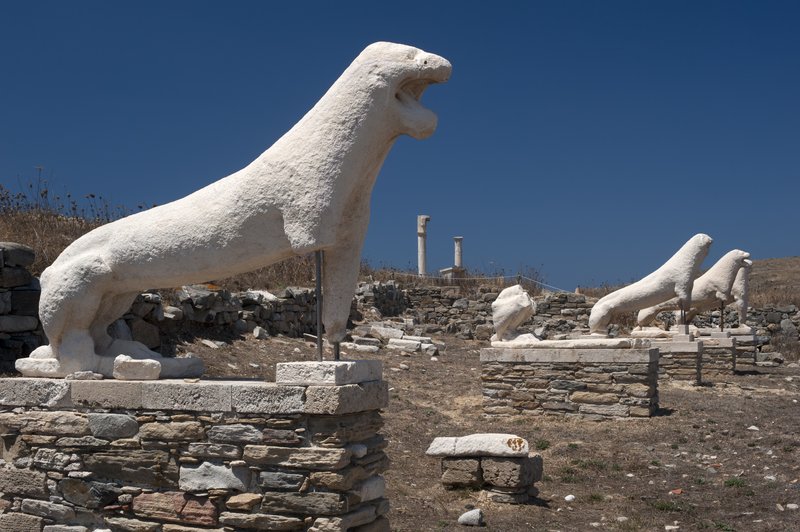
An uninhabited island 30 minutes by ferry from Mykonos, known as the legendary birthplace of Apollo and one of the most significant sanctuaries of the ancient Mediterranean. The site holds the Sanctuary of Apollo, the Terrace of the Lions, a theatre, an agora, and mosaic-floored residential districts.
🏛️ Daily 8:00am - 8:00pm
⏰ ~3 hr
⚠️ Closed November – March
🚢 30 min → Old Port · 🚶 8 min → Panagia Paraportiani
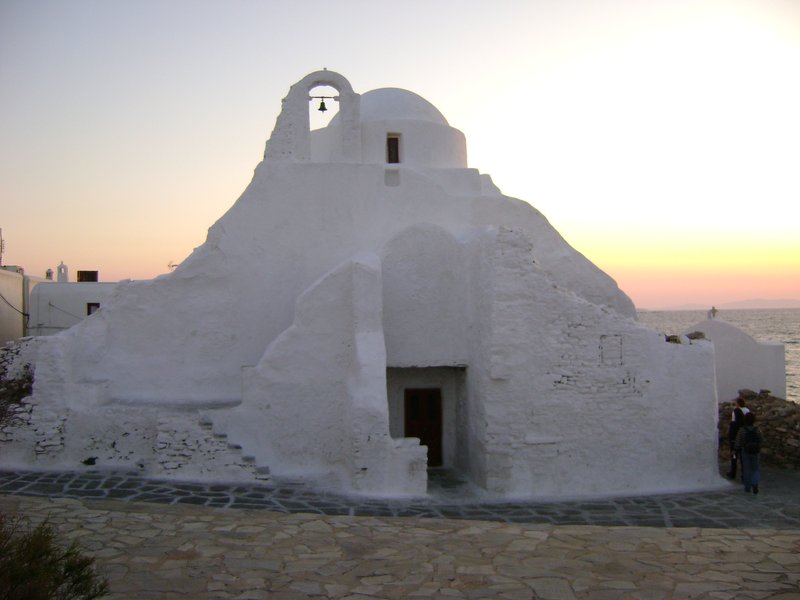
Five interconnected Eastern Orthodox churches built between the 15th and 17th centuries, with four at ground level forming the base for a fifth above them. Built at the gate of the former Venetian Kastro fortification; one of the most photographed examples of Cycladic religious architecture in Greece.
🏛️ Open 24/7
⏰ ~20 min
⚠️ Interior closed to public.
🚶 2 min · 🚕 2 min → Little Venice
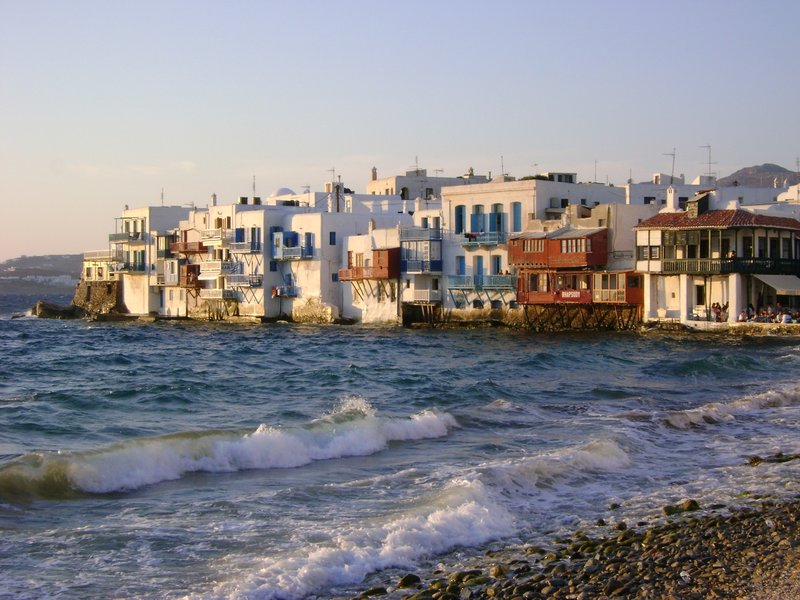
A waterfront quarter where 18th-century sea captains' houses were built with wooden balconies extending directly over the sea. The buildings now house bars, galleries, and restaurants. The windmills are 3 min walk from here.
🚶 3 min · 🚕 3 min → hotel
From Hotel: 🚶 8 min · 🚕 4 min → Windmills of Mykonos · Kato Mili
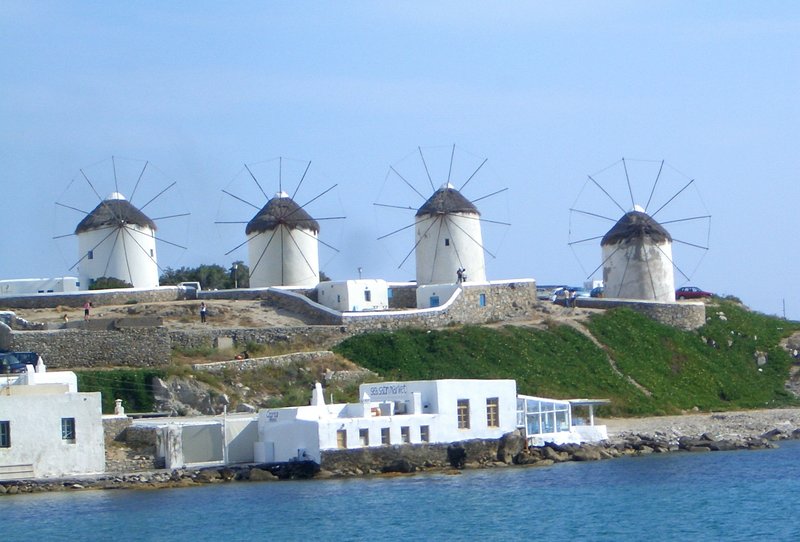
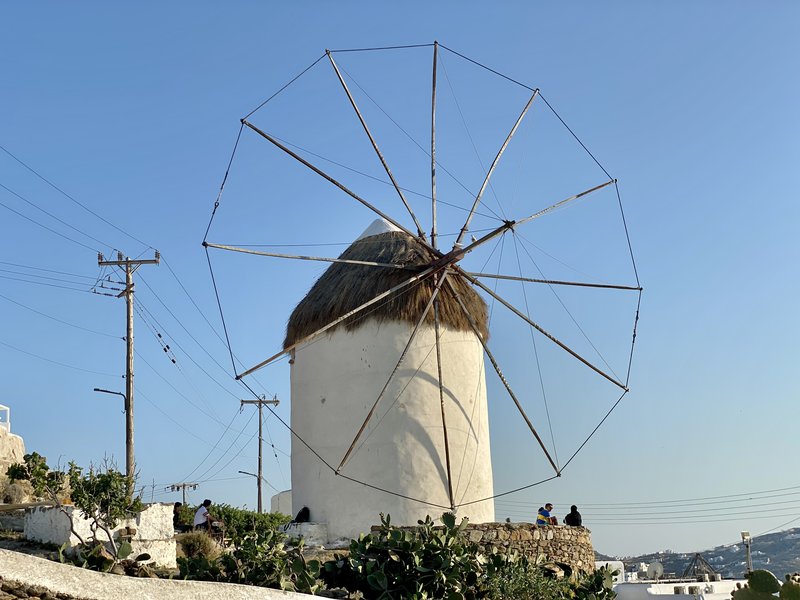
A row of whitewashed 16th-century windmills built by the Venetians on a ridge above Alefkandra harbor, between Little Venice and Neochori. Seven of the island's surviving mills stand in this cluster; they ground wheat and produced ship's rusks for passing Aegean traffic until milling stopped in the mid-20th century.
🚶 8 min · 🚕 4 min → Boni's Windmill
A standalone 16th-century windmill on a hilltop above Chora, restored in 1962 and converted into the island's Agricultural Museum — the only windmill on Mykonos open to walk through, with the original wooden milling mechanism and the miller's tools on display. The hilltop is also a wide viewpoint over Chora.
🏛️ Daily 5:00pm - 9:00pm (May 1 – Oct 15)
⏰ ~25 min
Free
🚶 10 min · 🚕 5 min → hotel
From Hotel: 🚕 20 min → Panagia Tourliani Monastery
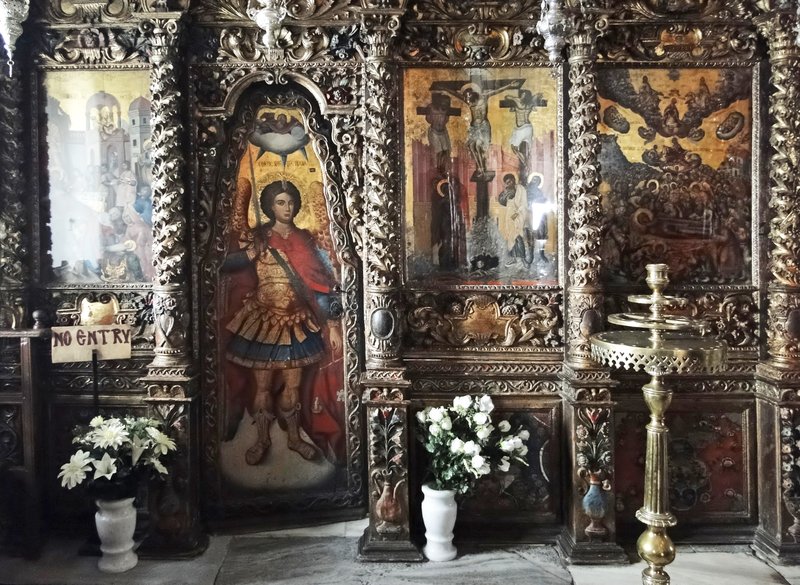
The island's most important monastery, founded in 1542 and restored in 1767 in the central square of Ano Mera village. The whitewashed catholicon carries a marble-carved bell tower, and its interior holds a wood-carved iconostasis built in 1775 by Florentine artists.
🏛️ Daily 9:00am - 1:00pm · 2:00pm - 7:30pm
⏰ ~30 min
Free
🚕 20 min → hotel
🏺 From the Notebook
Delos is worth understanding before you land: it is not a famous ruin alongside a lived-in city — it is an entire island that was legally uninhabited for centuries. After a series of Roman-era massacres depopulated it, no permanent settlement was permitted there again, which is why the mosaic floors of its merchant houses and the stone lions on their terrace survived largely undisturbed. The island was so sacred to the ancient world — literally the birthplace of Apollo, according to Greek mythology — that even dying and giving birth on it were at one point banned so the ground would not be desecrated. What you are walking through is a place that was preserved by prohibition, not just by time.
Back in Mykonos Town, the windmills that rise at the end of Little Venice were built by Venetian rulers in the 16th century to process grain brought through the island's busy harbor. They worked until the early 20th century. The Meltemi wind that made them useful — the strong north wind that blows across the Aegean every summer — is the same wind that makes the crossing to Delos choppy in the afternoon. Every ferry schedule runs the Delos trips in the morning for exactly that reason.
The Old Town's maze of lanes was reportedly built without a grid plan — the Mykonians deliberately made it a disorienting tangle so that pirates raiding the harbor could not navigate through it quickly. Whether this is entirely true or partly legend, the result is that turning left twice and right once rarely returns you to where you started, which makes wandering it more satisfying than most places that are designed for that purpose.