From Hotel: 🚕 30 min → Oia Kasteli Sunset Viewpoint
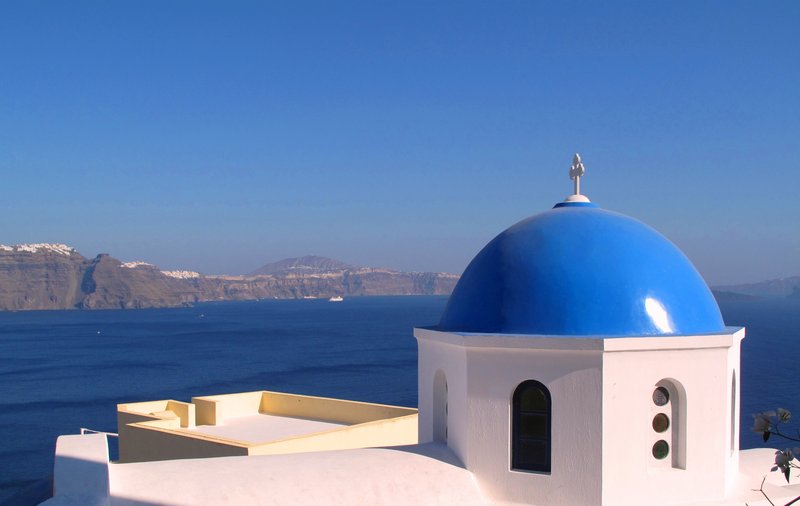
The ruined Byzantine Kasteli fortress at the northern tip of Oia, facing directly west over the caldera — the most celebrated sunset in the Cyclades. The island of Therasia and the volcanic cone of Nea Kameni frame the drop into the Aegean. Arrive 45 minutes before sunset.
🚕 37 min → Red Beach
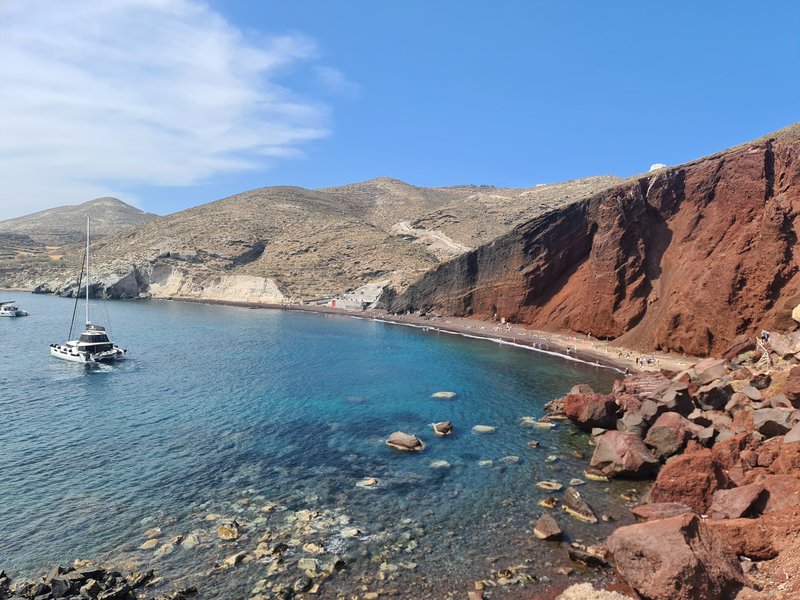
A dramatic crescent of deep-red volcanic sand hemmed by sheer ochre and rust-coloured cliffs — the most visually striking beach on the island, shaped by layers of compressed lava and pumice. The water is cold and clear. Rockfall from the cliffs is an active hazard; the coastal path occasionally restricts access.
🏛️ Open 24/7
⏰ ~1 hr
⚠️ Coastal path may close without notice due to rockfall — beach is accessible by short boat taxi from Akrotiri beach · seasonally
🚶 15 min · 🚕 5 min → Fira Caldera
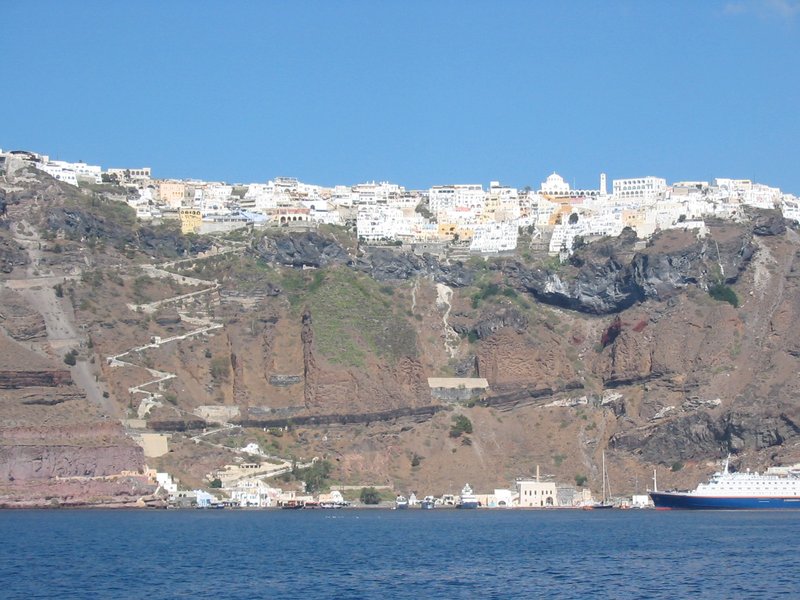
The edge of the caldera in Fira — a sheer 300-metre cliff carved by the eruption — where the island's volcanic origins become fully legible. Whitewashed buildings cascade down terraces toward the submerged crater; the volcanic islands of Nea and Palea Kameni float in the deep-blue water ahead.
🚶 8 min · 🚕 3 min → hotel
From Hotel: 🚕 30 min → Pyrgos Kallistis
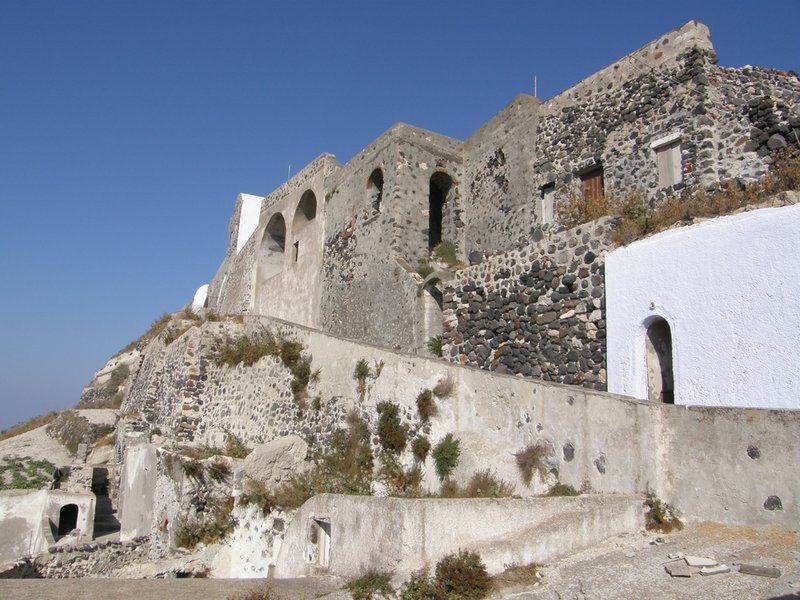
Santorini's former capital, built amphitheatrically on the island's highest hill. Narrow labyrinthine streets climb through a fortified medieval settlement to the ruined Venetian Kasteli at the summit — the best-preserved of the island's five castle villages, and one of the few left largely untouched by tourism.
🚕 9 min → Ancient Thira
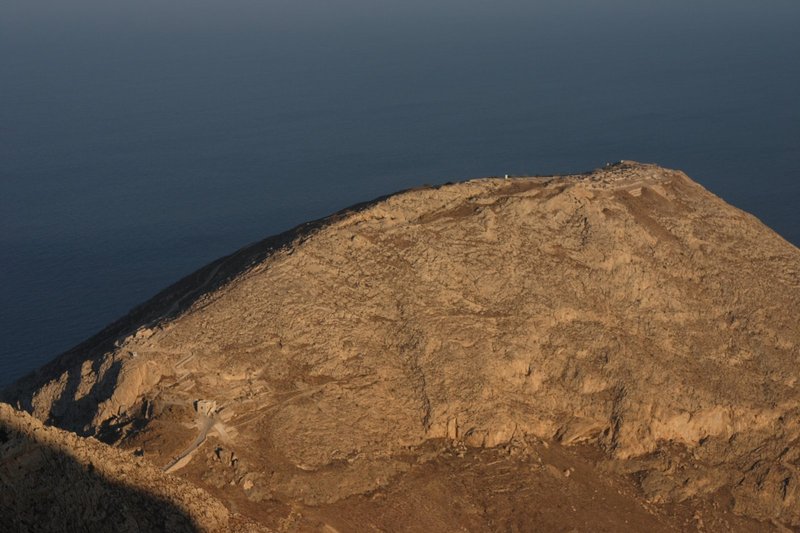
A Dorian city founded in the 9th century BC on the 396-metre summit of Mesa Vouno, between Kamari and Perissa. Excavations begun in 1896 uncovered an agora, temples to Apollo Karneios, a theatre, and a stone road network spanning the Hellenistic and Roman periods.
🏛️ Daily 8:30am - 3:30pm
⏰ ~1 hr 30 min
🚶 16 min · 🚕 4 min → Perissa Black Sand Beach
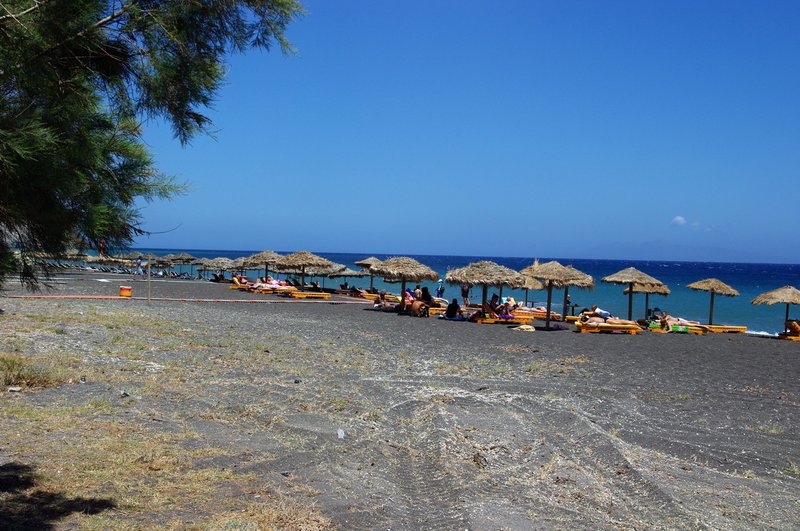
The island's longest black-sand beach, stretching beneath the sheer face of Mesa Vouno on the southeast coast. The sand is coarse volcanic grain from the same Theran eruption that shaped Red Beach — dark and sun-warmed, backed by a long promenade of tavernas and beach bars, with calm, clear water.
🏛️ Open 24/7
⏰ ~1 hr 30 min
🚕 18 min → Akrotiri Prehistoric City
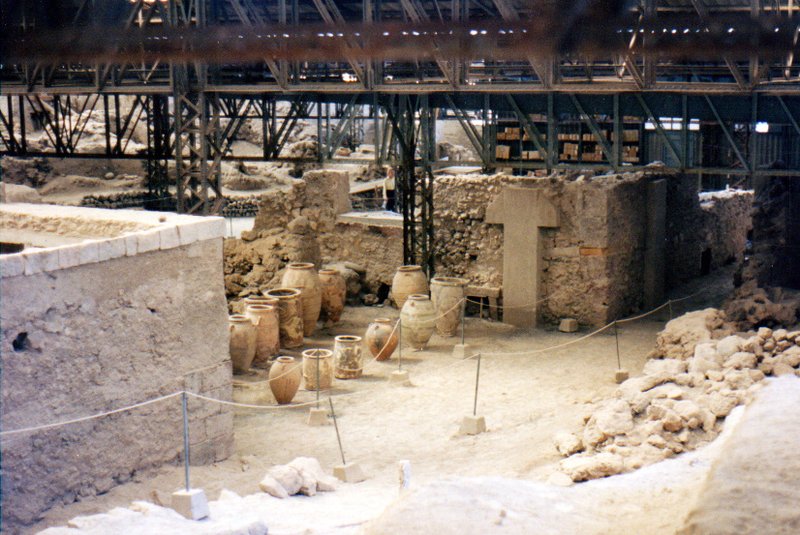
The best-preserved Bronze Age settlement in the Aegean, buried by the Theran eruption around 1613 BC. A purpose-built shelter covers multi-storey buildings and narrow stone streets — a Pompeii-like snapshot of Minoan-influenced civilisation frozen in volcanic ash for 3,600 years.
🏛️ Tuesday - Wednesday 8:00am - 8:00pm · Friday - Sunday 8:00am - 8:00pm · Monday 8:30am - 3:30pm · Thursday 8:30am - 3:30pm
⏰ ~1 hr 30 min
🚕 23 min → Museum of Prehistoric Thera
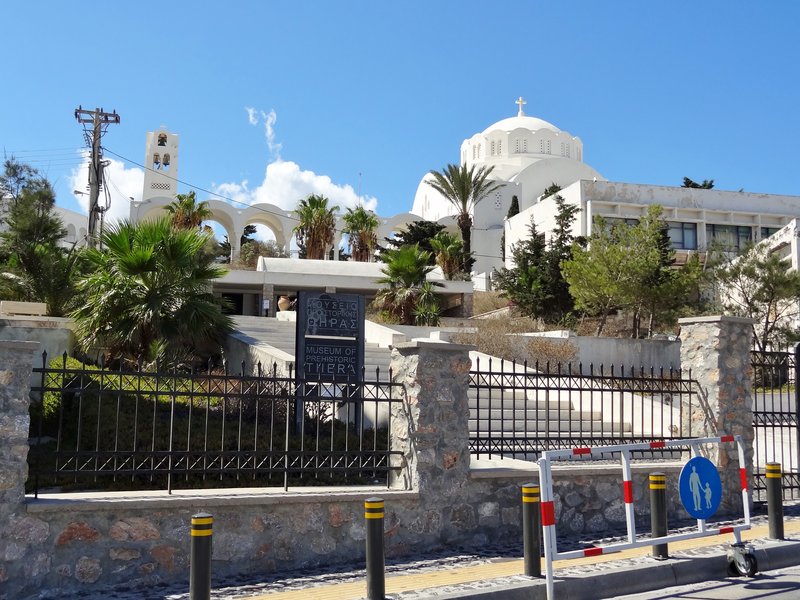
Built on the site of a church destroyed in the 1956 earthquake, this Fira museum holds Akrotiri finds — Cycladic figurines, Minoan pottery, gold jewellery, and Bronze Age wall paintings including the ship-procession fresco. The companion piece to Akrotiri, filling in what the buried city no longer shows.
🏛️ Daily 8:30am - 3:30pm
⏰ ~1 hr
🚕 22 min → hotel
From Hotel: 🚶 12 min · 🚕 4 min → Amoudi Bay
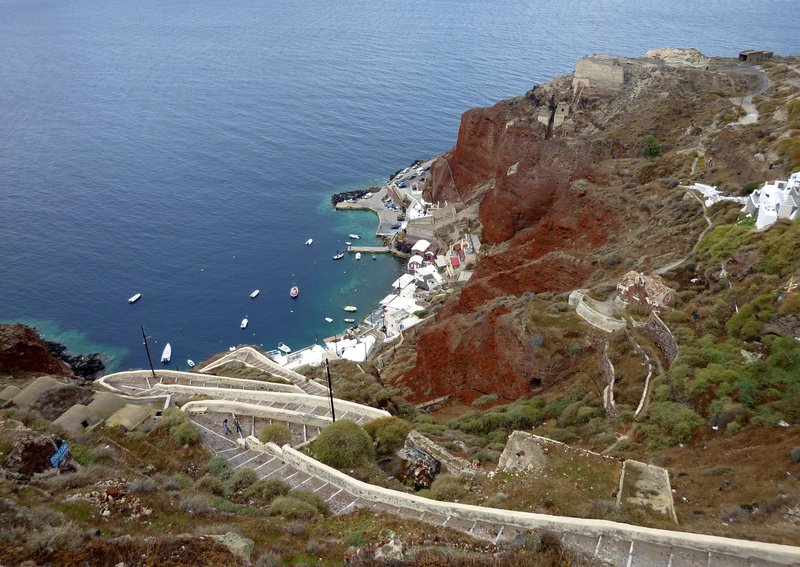
A small working harbour tucked into the volcanic cliffs directly below Oia, reached by roughly 300 stone steps. Fishing boats and a handful of seafood tavernas line the base of the caldera wall — a sea-level counterpoint to Oia's clifftop views, and a well-known sunset spot in its own right.
🏛️ Open 24/7
⏰ ~1 hr
⚠️ Reached only via roughly 300 steps from Oia — no vehicle access
🚕 20 min → Skaros Rock
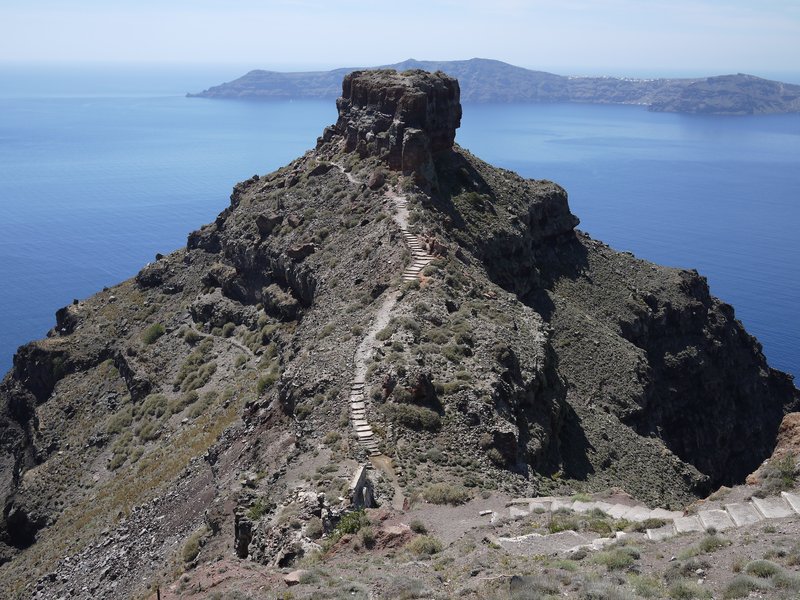
A sheer volcanic promontory jutting from the caldera rim below Imerovigli, once crowned by a 13th-century Venetian fortress that served as the island's capital until eruptions collapsed it into the sea. A short cliffside path leads out past the Theoskepasti chapel to open caldera views on three sides.
🏛️ Open 24/7
⏰ ~1 hr 30 min
🚕 25 min → Emporio Kasteli
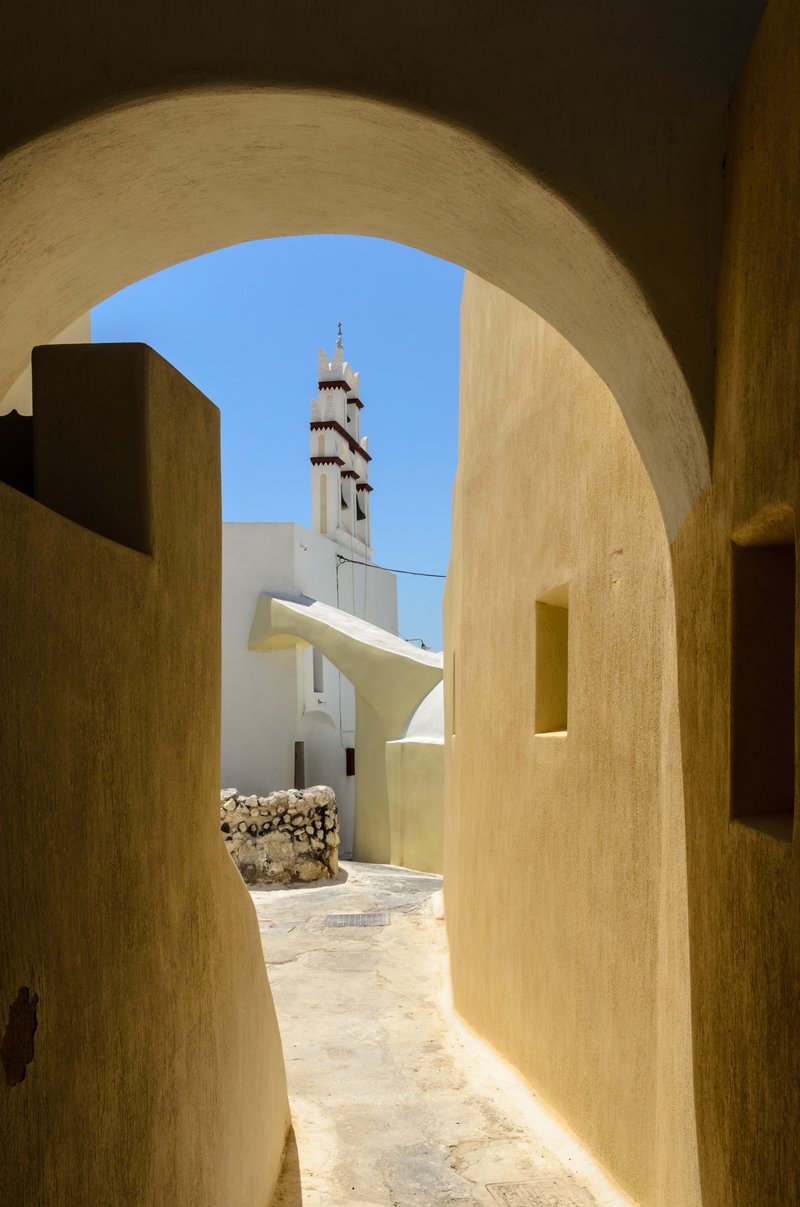
A still-inhabited fortified village built around 1450 at the foot of Profitis Ilias — the largest of Santorini's five kastelia. Tightly packed houses form the outer fortress wall; the square Goulas watchtower at the northern edge is the best preserved on the island.
🚕 32 min → hotel
🌋 Everything is the Eruption
Almost everything that makes Santorini singular traces back to a single event: the Theran eruption around 1613 BC, one of the largest volcanic explosions in the last 10,000 years. The caldera you look across is the collapsed throat of the volcano. The sheer cliffs the hotels cling to are the eruption's interior wall. The red and black beaches are compressed lava. The whitewashed villages perch on pumice.
Even the wine is the eruption. Santorini's volcanic soil is so nutrient-poor and porous that the Assyrtiko vine has to push its roots metres deep to find moisture — producing a grape of extraordinary mineral concentration that no other terroir in Greece can replicate. The basket-vine training, the white cubes against the caldera, the blue domes, the sunset crowds at Kasteli: they are all just people arranging themselves around the aftermath of a catastrophe.