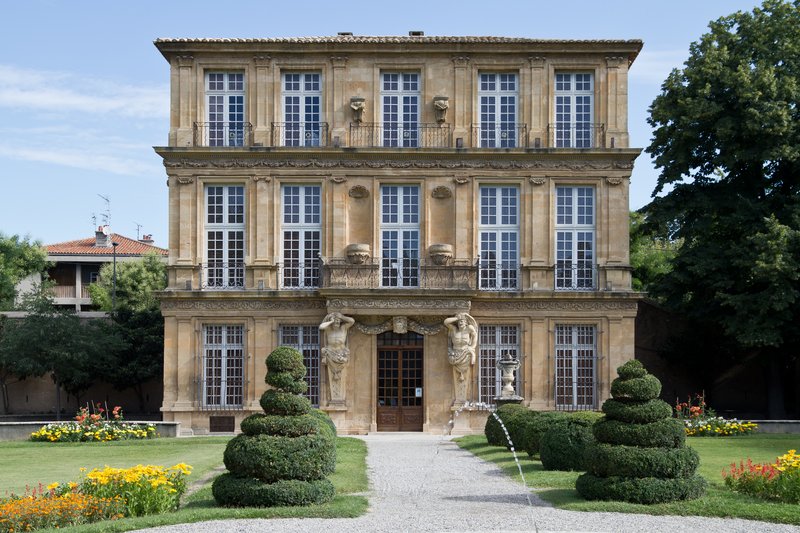
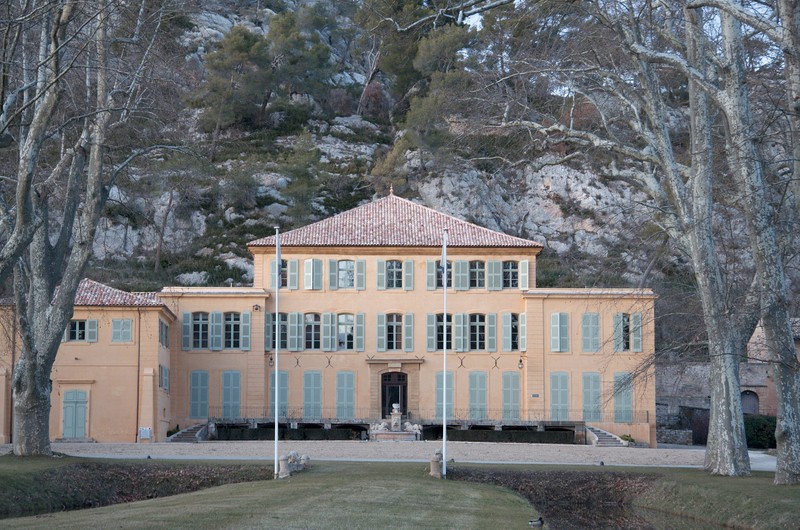
A baroque pleasure pavilion built in 1665 for the Duke of Vendôme, framed by sculpted atlantes and a formal French garden. Inside, the rooms hold a museum of 17th- and 18th-century decorative arts — Provence's finest surviving classical maison de plaisance, a world away from the tourist centre.
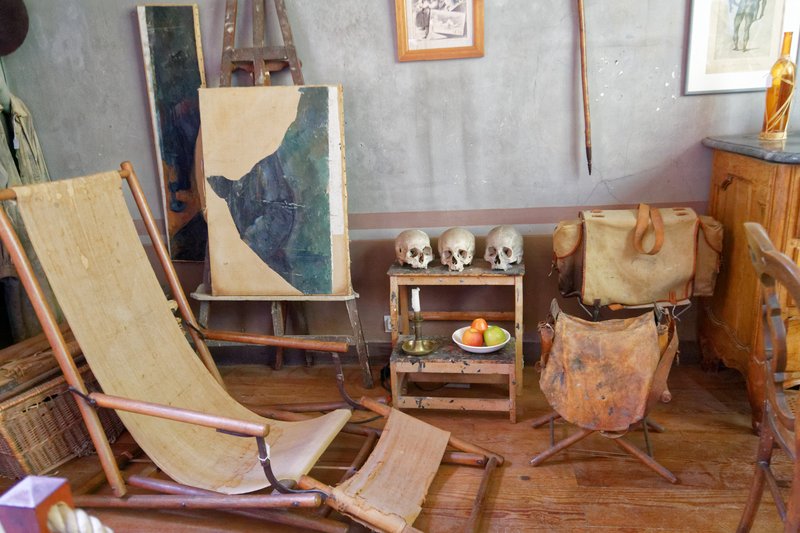
Paul Cézanne's last studio on the Lauves hill, kept exactly as he left it in 1906 — coats, bottles, skulls and ladders that recur in his canvases, lit by the great north window he built for the work. Entry is by timed, small-group ticket — reserve ahead on the official Cézanne sites.
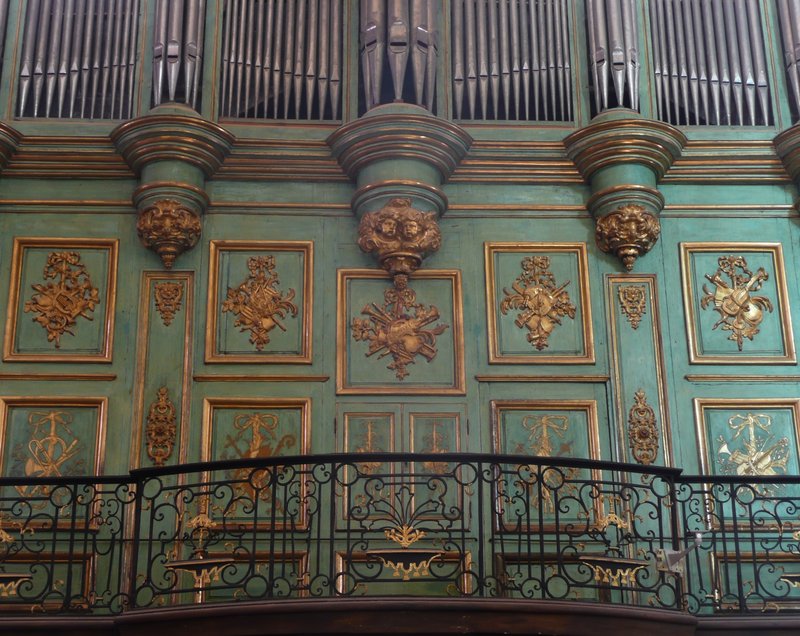
A cathedral built across fifteen centuries — Roman columns, a 5th-century baptistery, a Romanesque cloister, and Gothic and Baroque naves side by side. Don't miss Nicolas Froment's Burning Bush triptych.
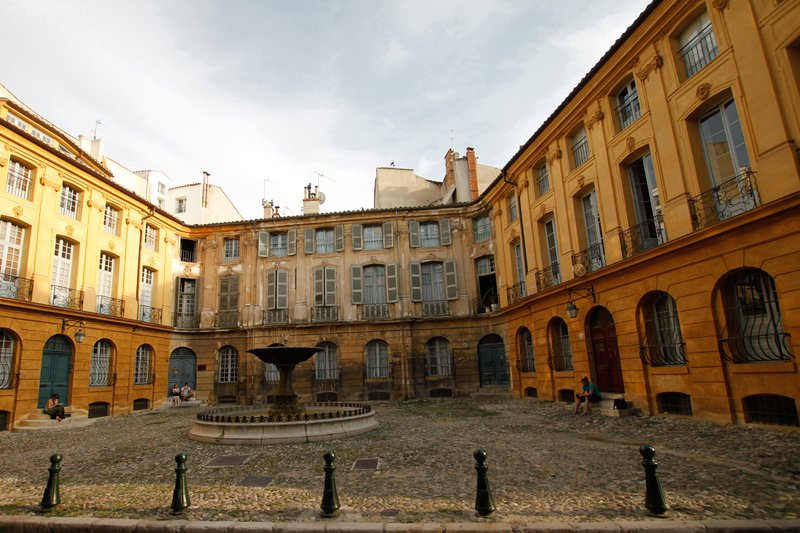
A jewel-box cobbled square from 1745, framed on three sides by matching Baroque façades and a single central fountain — modelled on the Parisian hôtel courtyards and used today for summer chamber concerts.
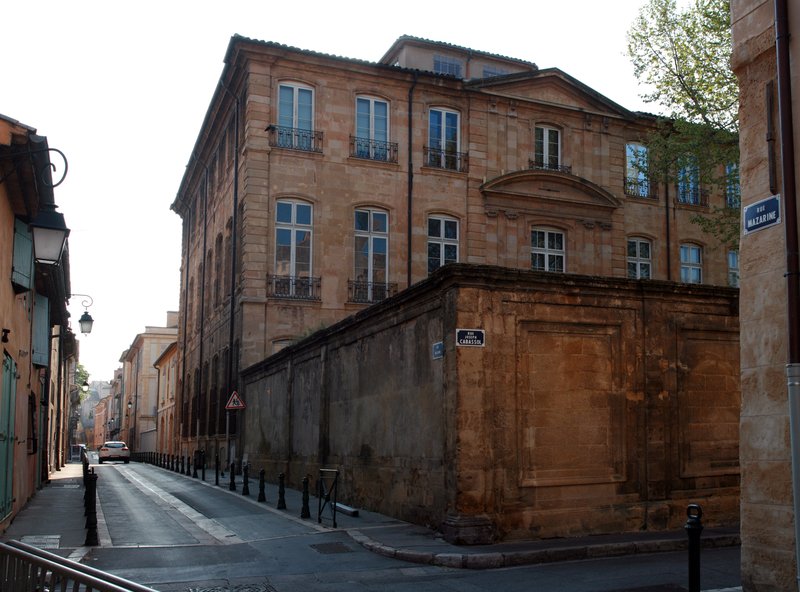
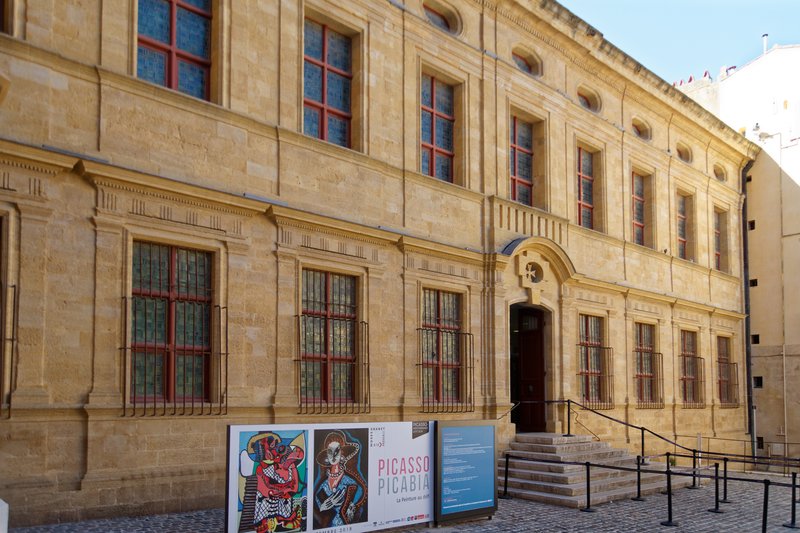
A sublime 1740s hôtel particulier turned art centre, with grand period rooms, a French formal garden, and ambitious painting exhibitions. Entry is by timed ticket — reserve ahead on the art centre's official site.
Aix's finest art museum, installed in the 17th-century priory of the Knights of Malta. A dedicated room holds eight Cézanne canvases alongside works by Ingres, Rembrandt, and Rubens, plus Celto-Ligurian sculptures from the oppidum of Entremont. Tickets at the door or on the official site.
Provence's first Gothic church, begun in 1272 by the Knights of Malta and consecrated in 1346 — a single nave of austere elegance rising 34 metres to its bell tower, pierced by early Gothic lancet windows. The sacristy houses the stone sarcophagi of the Counts of Provence.
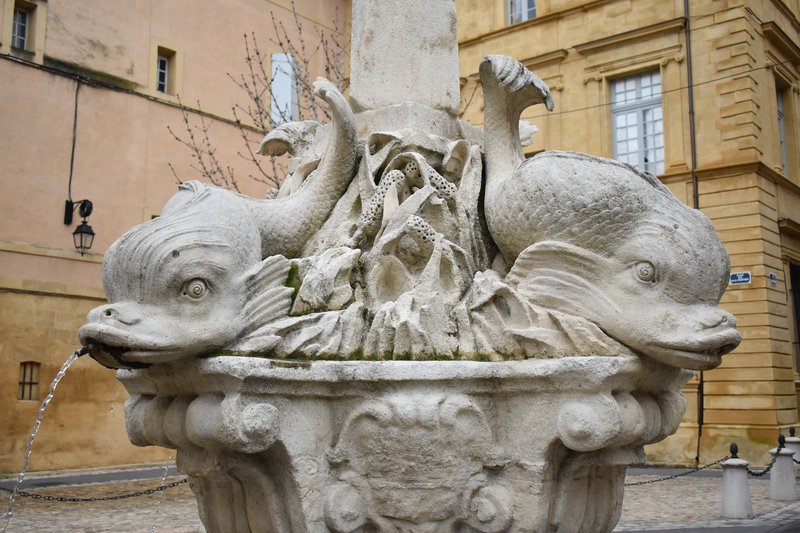
Four leaping dolphins carved in 1667 by sculptor Jean-Claude Rambot mark the crossing of the Mazarin grid — the quietest, most aristocratic square in Aix, surrounded by 18th-century hôtels particuliers. Worth a slow circuit of the surrounding streets before walking north.
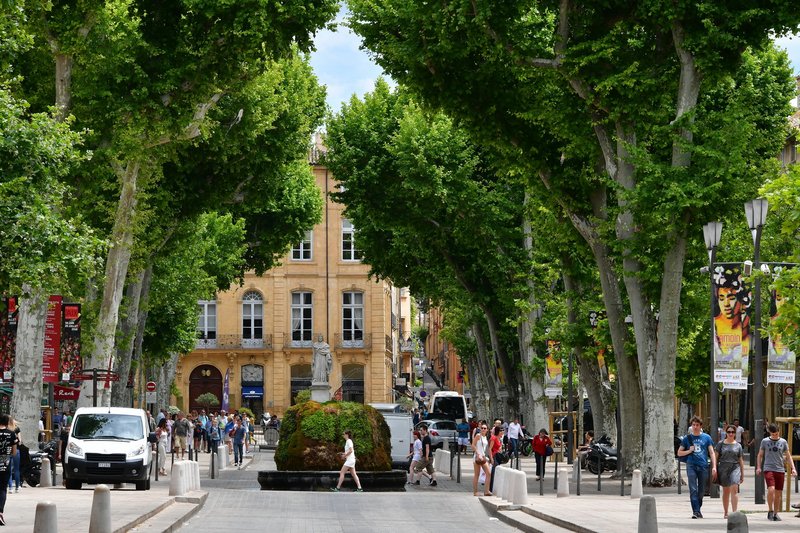
Aix's grand plane-tree avenue, laid out in 1651 — a canopy of shade over fountains, cafés, and golden hôtels particuliers. The social spine of the city and the best place to feel its rhythm.
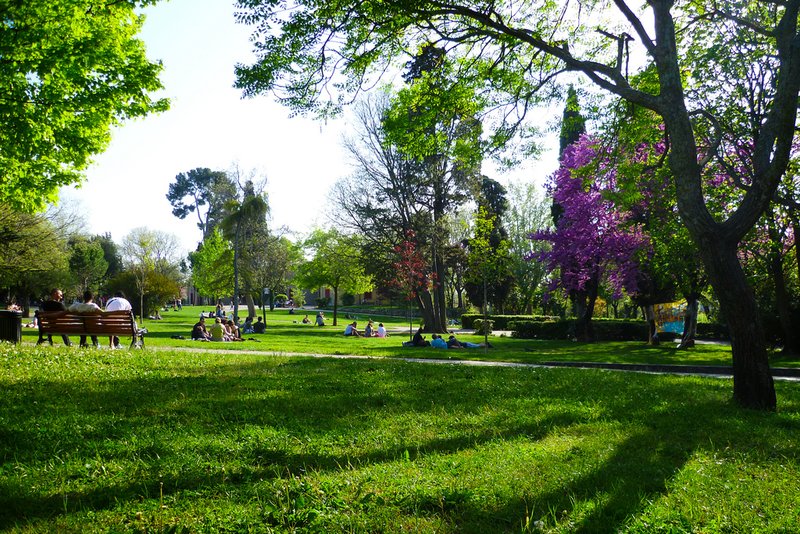
Aix's most characteristic public garden, laid out in 1932–35 south of the centre: a lower level of classical French parterres and a reflecting pool linked by a double staircase to a romantic upper garden. The park holds Philippe Solari's bust of Emile Zola and Bottinelly's bust of Frédéric Mistral.
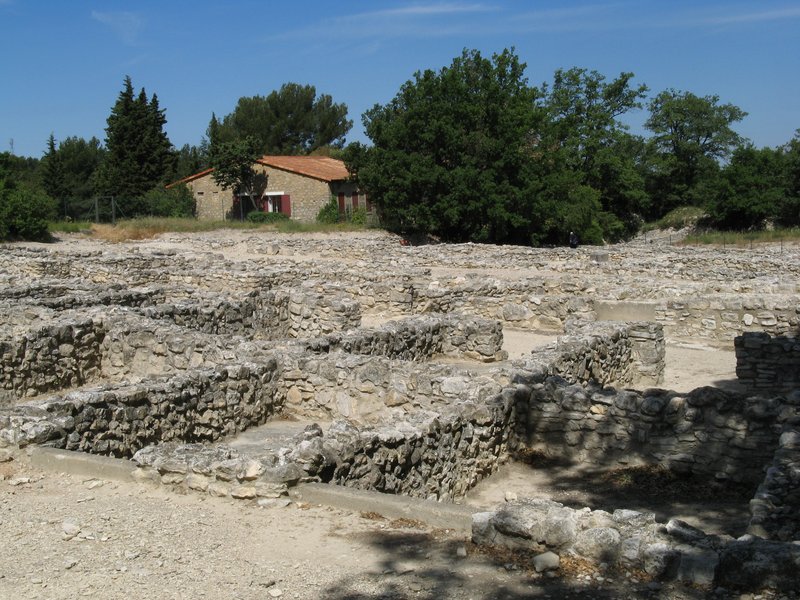
Entremont was the hilltop capital of the Celtic-Ligurian Salyes from around 175 BC until Rome's consul Gaius Sextius Calvinus destroyed it in 123 BC. Excavated ramparts, a street grid, and a warrior sanctuary — where enemy skulls were displayed — survive across the 3.5-hectare plateau park.
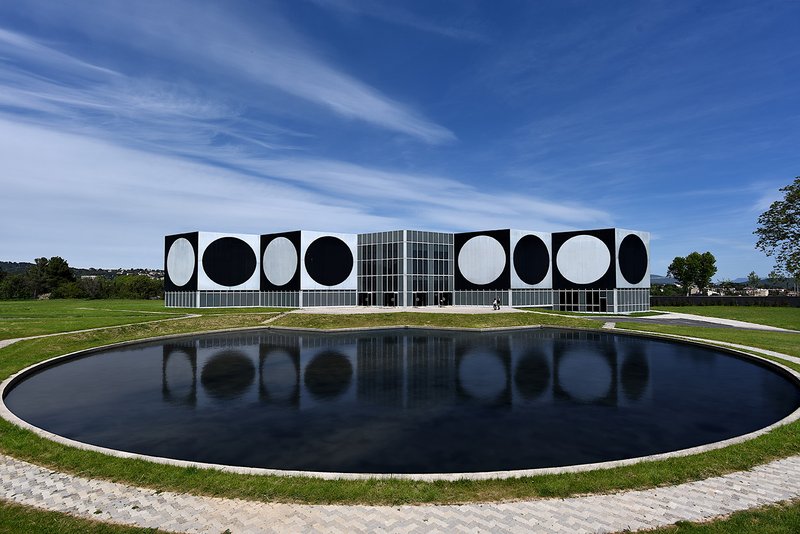
Vasarely designed this building in 1973–76: sixteen hexagonal cells clad in alternating black-and-white circles and squares that animate optically as you move. Inside, 44 monumental 6-by-8-metre kinetic works fill the seven largest cells — each commissioned for this space, inseparable from the architecture.
The springs here led Rome to found Aquae Sextiae in 123 BC — the waters that became Aix-en-Provence. The thermal fountain on Cours Sextius marks the ancient source; the spa building at No. 55 stands on the exact footprint of the 1st-century baths, with vaulted Roman pools preserved beneath the lobby floor.
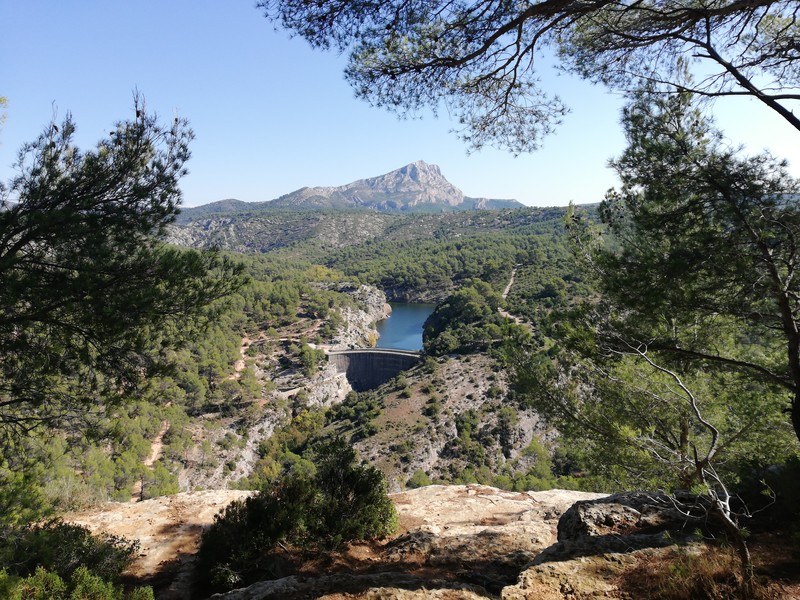
Conceived in 1838 by François Zola — father of novelist Émile Zola — to supply Aix with drinking water during cholera epidemics, completed in 1854 after his death. At 36.5 metres it was the first arch dam of the modern era built to pre-calculated geometry, and stayed France's tallest dam until 1866. The water it carried still resurfaces downtown at the Fontaine de la Rotonde.
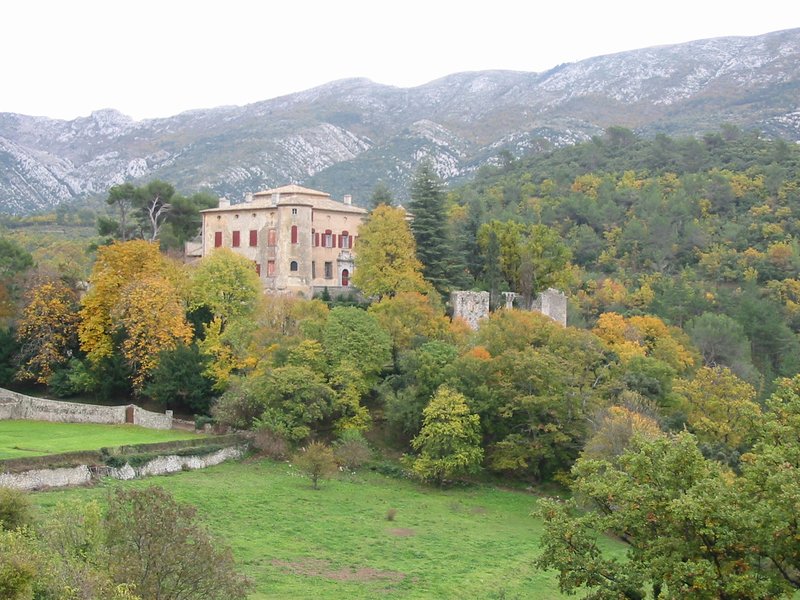
A small village at the foot of Sainte-Victoire, built around a 15th-century château restored in the 1640s by the Galliffet family — now the private headquarters of the Société du Canal de Provence and closed to visits. Cézanne came here constantly to paint, often lunching at the old Berne restaurant; the D17 out of the village is still signposted as the Route Cézanne.
A village on the quiet northern flank of Sainte-Victoire, its château built on a former Roman fort site and held by the de Clapiers family for 250 years. Picasso bought it in 1958 — drawn, like Cézanne before him, to the view of the mountain — and lived there until 1962. He and his wife Jacqueline are buried in the château's forecourt, still private Picasso family property.
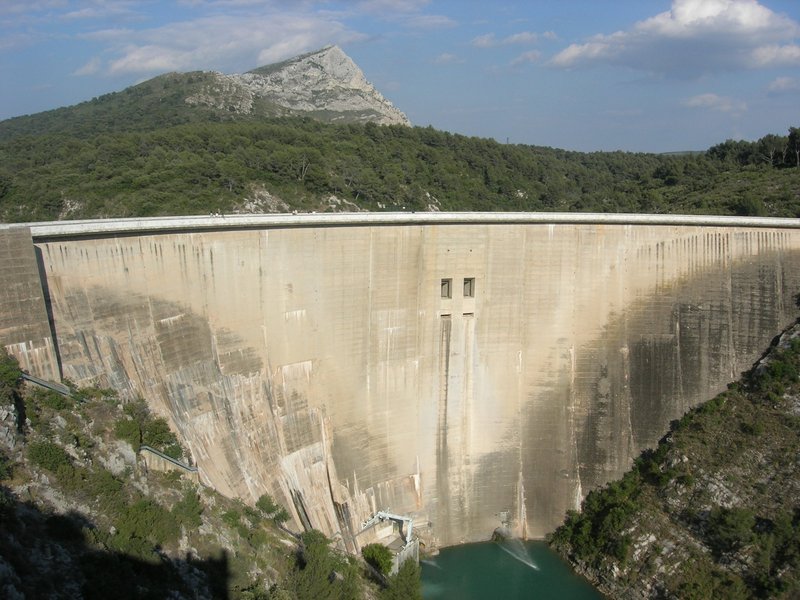
A 1951 arch dam holding back a turquoise lake directly beneath Sainte-Victoire's south face — the standard starting point for hikers heading up to the Croix de Provence, the 19-metre cross that crowns the ridge. Even without walking further, the dam wall itself frames one of the clearest views of the mountain that drew Cézanne back more than sixty times.
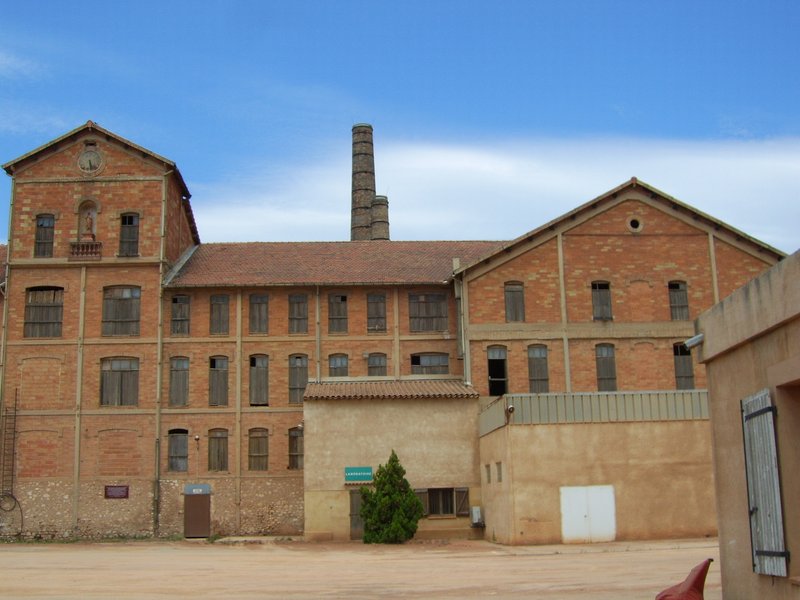
A former tile factory turned internment camp in September 1939, holding some 3,500 foreign-born artists and intellectuals — among them Max Ernst — before becoming a transit camp for roughly 2,000 Jews deported via Drancy to Auschwitz in 1942. Since 2012 it operates as a memorial and UNESCO-affiliated centre against racism and antisemitism, using the original buildings largely as they were left.
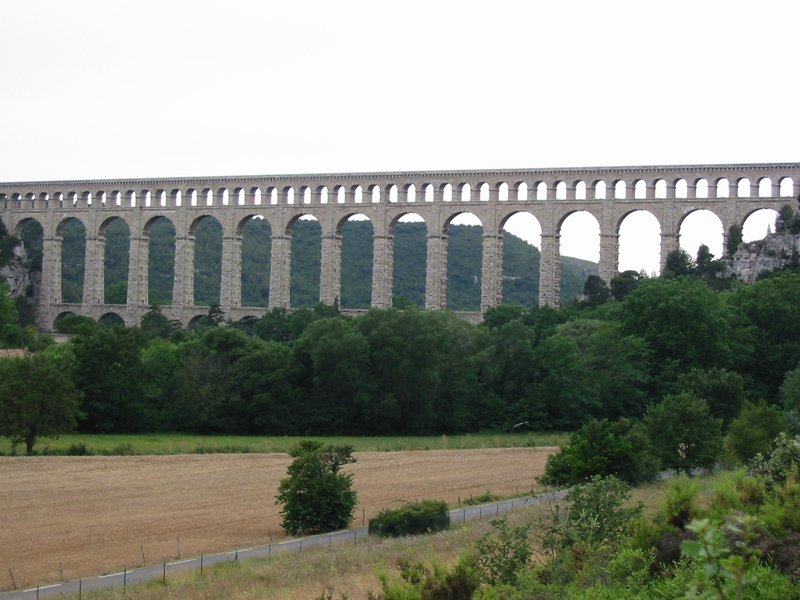
The largest stone aqueduct in the world, standing 83 metres above the Arc river valley near Ventabren. Built between 1841 and 1847 by 5,000 labourers to carry Durance River water to Marseille, its three tiers of arches still dwarf everything around them — a 19th-century engineering feat that makes the Zola Dam it shares an era with look almost modest.
From Hotel: 20 min · 6 min → Fontaine de la Rotonde
1.Fontaine de la Rotonde~20 min
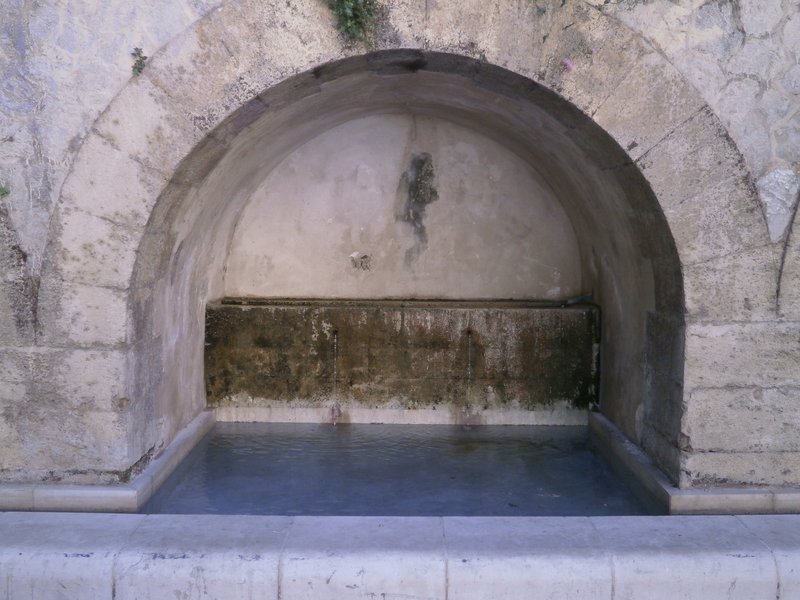
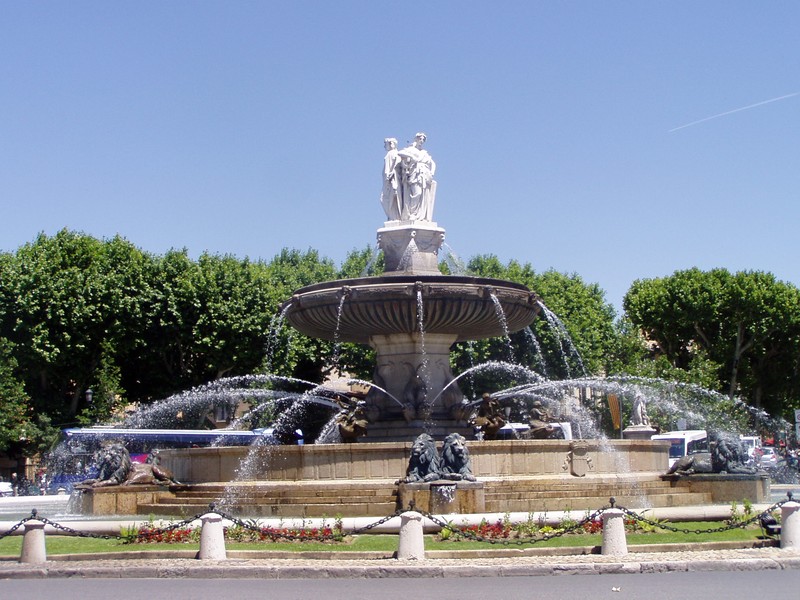
Aix's grandest fountain, inaugurated in 1860 at the foot of Cours Mirabeau, where three marble figures by local sculptors Ramus, Chabaud and Ferrat face Justice toward the Cours, Commerce and Agriculture toward Marseille, and the Fine Arts toward Avignon. The water originally reached it via the Zola Canal — the same project the dam at Le Tholonet was built to serve.
Full-day small-group tour sampling wines at two Côtes de Provence St-Victoire wineries, then visiting hilltop Luberon villages — Bonnieux, Roussillon · ochre village and Lourmarin · Renaissance castle. Max 8 guests, English/French guide.
Half-day small-group tour to the Luberon — Gordes, Roussillon and a third village depending on the season. A local guide leads the group through hilltop medieval streets and ochre cliffs. Max 8 guests, departs from the Tourist Office.
Full-day small-group tour to five Luberon villages — L'Isle-sur-la-Sorgue, Fontaine de Vaucluse, Roussillon, Gordes and Lourmarin. Air-conditioned minivan, guides in English, Italian, French and Spanish. Max 16 guests.
Full-day excursion from Aix to the fishing port of Cassis — guided walk through the village, a boat ride through the Calanques limestone cliffs and turquoise coves, and a Provence rosé dégustation. Max 8 guests.
Small-group day trip combining Cassis · port village, Calanques coast views and Marseille · Le Panier, Saint-Victor Abbey, Notre-Dame de la Garde in a single tour from Aix-en-Provence. Cruise around the Calanques UNESCO coastline included.
Full-day tour combining wine tastings at two Côtes de Provence wineries with a guided visit to Luberon villages including Gordes, Roussillon and Lourmarin. English/French guide, max 8 guests, Savoyard lunch included.
Small-group full-day tour to the Luberon's most beautiful perched villages — Gordes, Sénanque Abbey, Roussillon and Lourmarin. Air-conditioned minivan, multilingual guide. Praised for knowledgeable and personable guides. Free cancellation.
Full-day excursion to the port of Cassis — guided walk through the village, boat tour of the Calanques limestone cliffs and turquoise coves, and a Provence rosé dégustation. Max 8 guests. Departs from the Tourist Office in Aix.
Half-day small-group tour to the Luberon's perched hilltop villages — Gordes, Roussillon and a third seasonal village — with a local English/French guide. Air-conditioned minivan, max 8 guests. Ideal morning excursion from Aix.
Full-day tour visiting the Luberon's famous weekly market · Isle-sur-la-Sorgue antique market and four villages — Gordes, Roussillon, Lourmarin and a seasonal village. English/French guide, max 8 guests. Includes 8–9 hours of guided exploration.
2–3 hour guided walking tour of Aix's old town covering Cours Mirabeau, Place d'Albertas, hidden fountains and the city's Baroque and classical architecture. Multilingual guide in English, French and Spanish. Max 12 guests.
Half-day small-group excursion to Gordes, Roussillon and a third Luberon village. English/French guide, max 8 guests. Consistently praised for knowledgeable guides and well-paced itinerary. Departs from the Tourist Office in Aix.
Half-day small-group wine tour visiting two estate wineries in the Côtes de Provence St-Victoire appellation — tastings of rosé, white and red at the source, guided by a local wine expert. Max 8 guests, departs from Tourist Office.
Small-group lavender tour from Aix visiting fields, a distillery and a Luberon village in bloom · July–August peak or year-round as a lavender culture and Provence countryside excursion. Max 8 guests, guide in English and French.
Afternoon small-group wine tour to two appellations — Bandol · Mourvèdre-based reds and Cassis · rare Clairette whites — with estate tastings along the Mediterranean coast south of Aix. Max 8 guests. Departs at 1:30pm from Tourist Office.
Aix's signature sweet since the 15th century — a smooth almond-and-candied-melon paste on a thin wafer, glazed in royal icing and cut to a pointed-oval shape said to echo a smile.
Foreign number: accepted. — it runs on the same Uber account, so the code comes by SMS to any international number, with a voice call as the fallback.
The widest coverage in Aix — most restaurants in the Cours Mirabeau area and surrounding neighbourhoods are on the platform. Straightforward to use with any international card and no local number required.
Foreign number: not required. — sign-up runs on Google, Apple, Facebook or email with no phone field at all, so no verification code has to arrive.
A shorter list than Uber Eats in Aix, skewing toward cafés and casual spots rather than the Cours Mirabeau brasseries. Worth opening for the independents it carries alone, but Uber Eats is the one to try first for breadth.
Foreign number: accepted. — the code comes by SMS to any international number, and "Call me with code" reads it out if the SMS is blocked.
Works reliably in Aix with international numbers and cards. Taxis are plentiful near Cours Mirabeau, but Uber adds upfront pricing and works across the city and to surrounding villages. Coverage is solid throughout the historic centre and outlying neighbourhoods.
The walled papal city on the Rhône — the colossal Palais des Papes, the famous half-bridge of the song, and a compact medieval core reachable by direct TGV in under half an hour.
Provence's sun-baked port capital — the Vieux-Port, the Panier old town, the MuCEM, and the white-cliffed Calanques just beyond. Frequent regional trains run south through the day.
Languedoc capital with a pedestrian-only medieval core, the oldest botanical garden in France, and a grand 19th-century aqueduct-fed water tower at Place de la Comédie.
Almost everything on this one-day route is a thing Cézanne actually painted or walked. He grew up a few doors off the Cours Mirabeau, drank at its cafés, was baptised in Saint-Sauveur, and spent his last four years in the studio on the Lauves looking south toward Montagne Sainte-Victoire — the mountain he painted more than sixty times. Aix is rare among cities in that you can stand inside the source material: the light on the limestone, the plane-tree shade, the ochre walls are the same palette he spent a lifetime trying to fix on canvas.
One small thing I loved: the calisson, the city's almond sweet, is cut to that pointed-oval shape said to echo a smile — legend traces it to a 15th-century royal wedding feast held in Aix. A town that turned its own happiness into a confectionery shape feels of a piece with a painter who couldn't stop painting the hill at the end of his street.