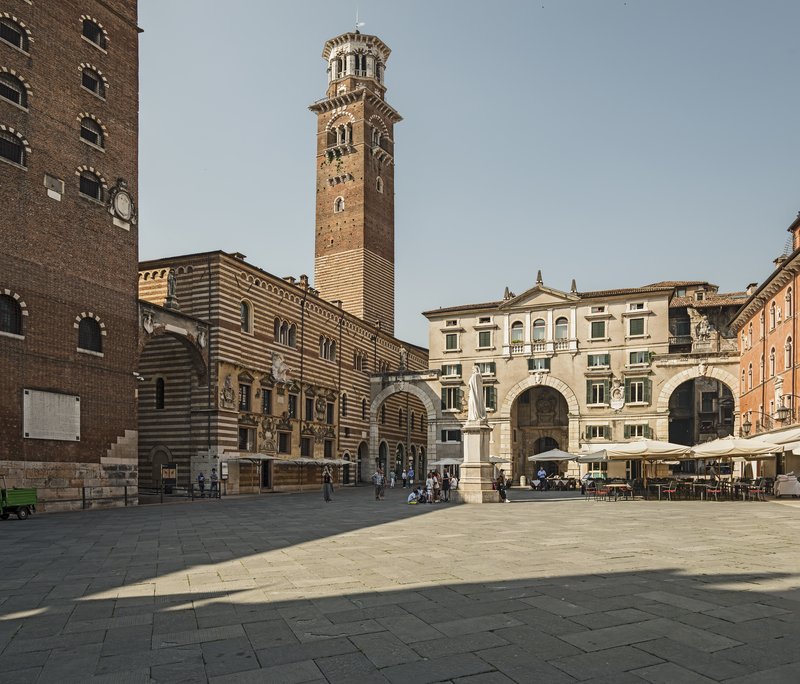
Verona's governmental square, ringed by the medieval Palazzo del Podestà, the Renaissance Loggia del Consiglio and the Gothic Palazzo della Ragione. Dante's statue stands at the centre — he took refuge here as a guest of the Scaligeri in exile.
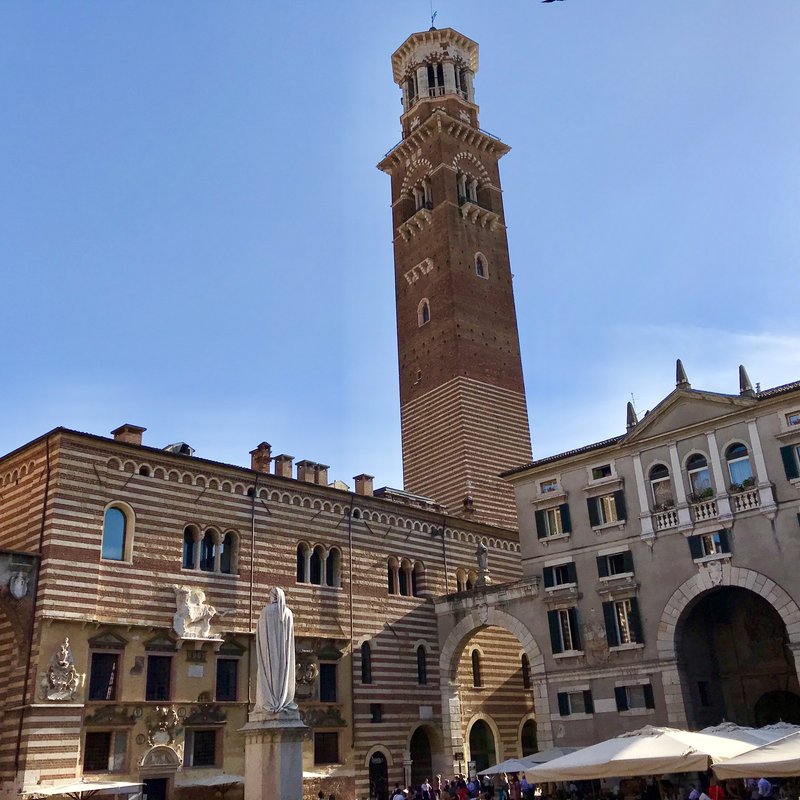
The 84-metre medieval tower rising over Piazza dei Signori. A lift, or 368 steps, climbs to an open belvedere with the finest panorama over Verona's rooftops, river bends and surrounding hills.
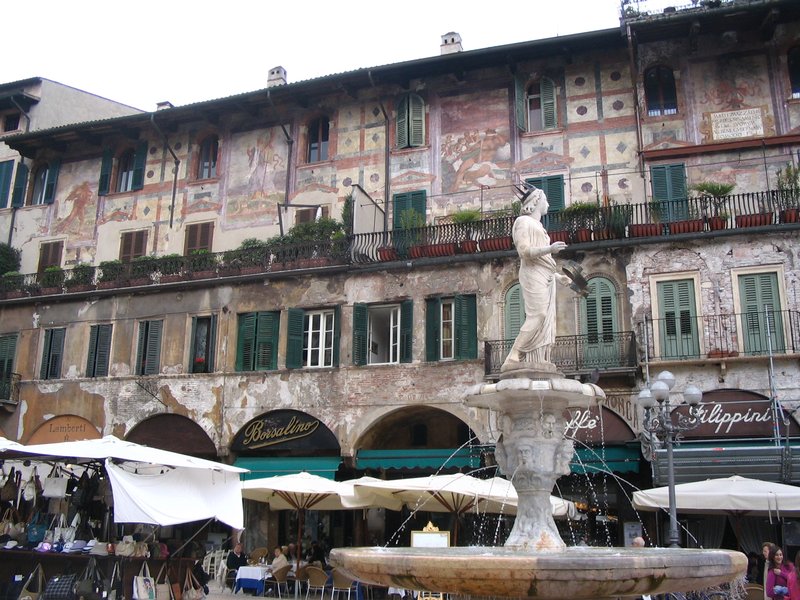
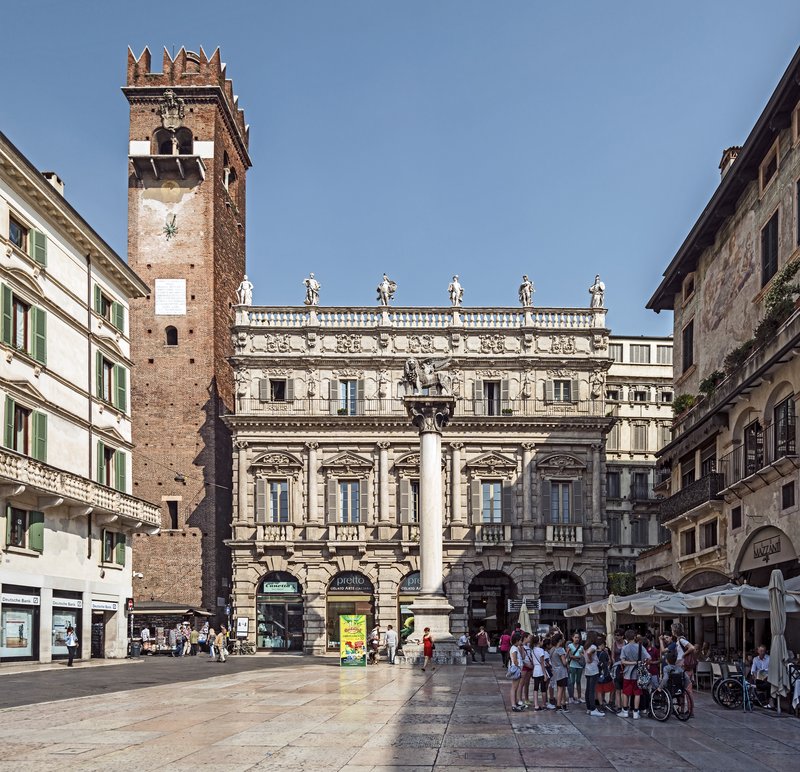
Verona's market square, laid over the old Roman forum and framed by frescoed palaces, the Madonna Verona fountain and the Torre del Gardello. Market stalls and café terraces fill it by day.
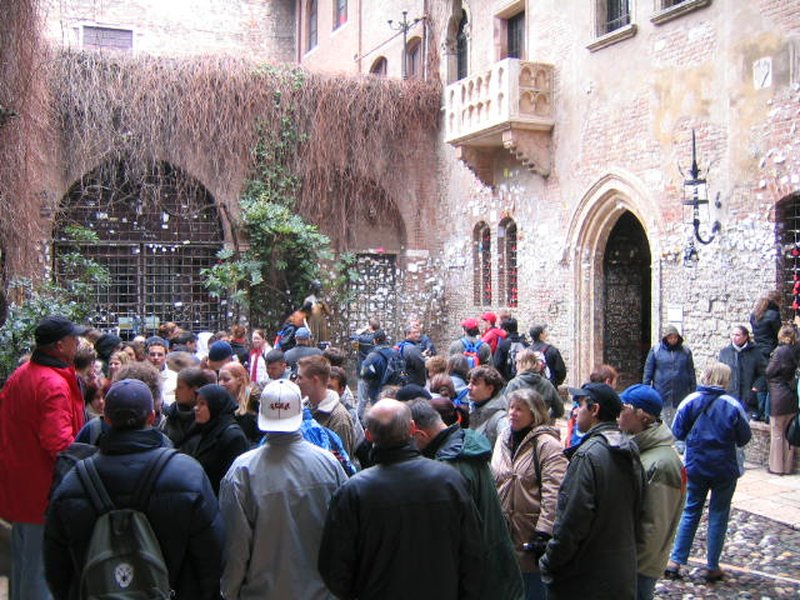
The medieval courtyard a Victorian legend attached to Juliet Capulet — whose balcony is the most photographed spot in Verona. The house is a museum of Romeo and Juliet, the city and the letters that have been left here since the 1930s.
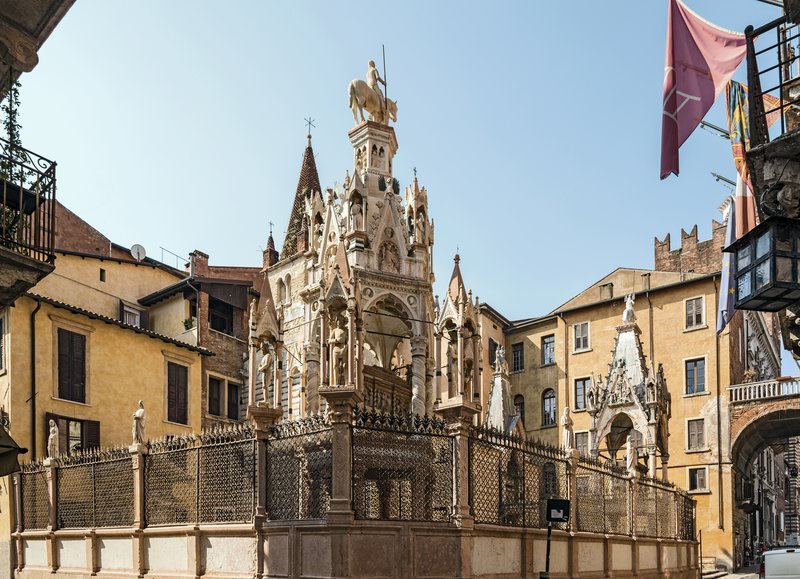
The Gothic funerary monuments of the Scaligeri lords, erected over the family church of Santa Maria Antica in the 13th and 14th centuries. The wrought-iron fence and canopied tombs — some topped with equestrian figures — are the finest Gothic funerary sculpture in Italy.
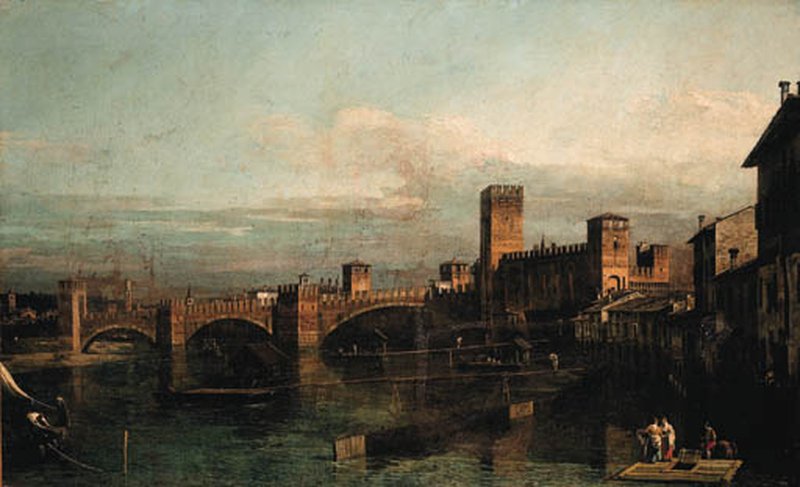
The Scaligeri family's brooding red-brick fortress on the Adige, its ramparts and the fortified Ponte Scaligero now home to Verona's civic museum of medieval and Renaissance art.
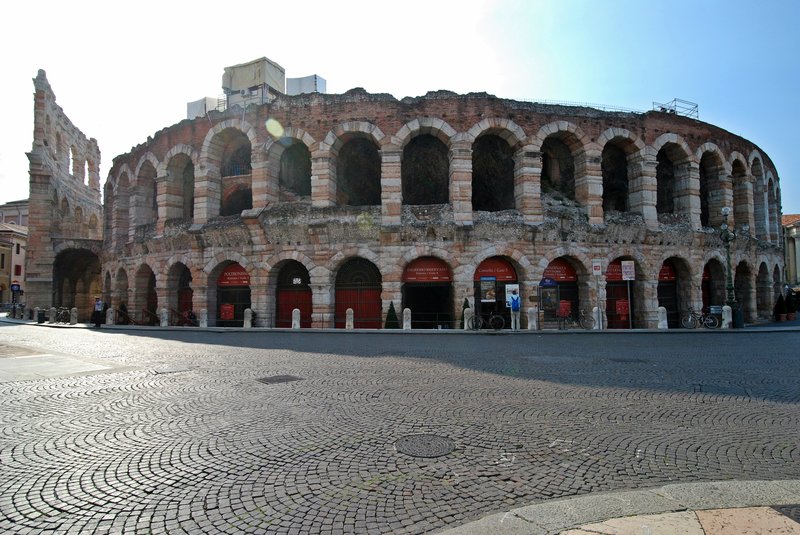
One of the best-preserved Roman amphitheatres in the world, built by Rome to seat 30,000. Its pink-limestone arcades still ring Piazza Bra and stage the city's summer opera festival.
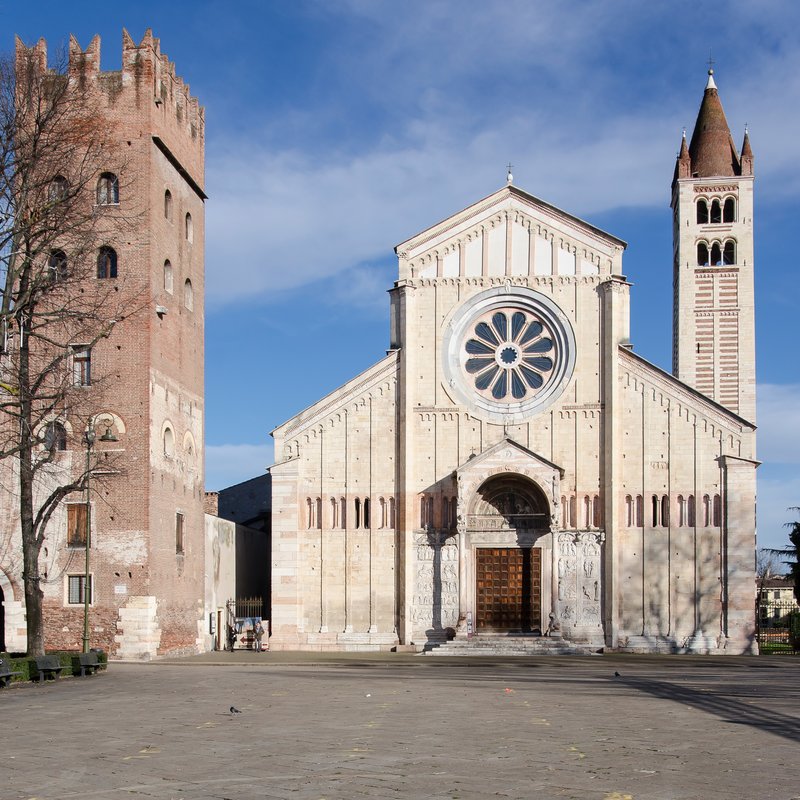
Verona's greatest Romanesque church, built in the 12th century on the grave of the city's patron saint. The bronze doors and rose window on the façade, and Mantegna's altarpiece inside, make it one of the finest Romanesque ensembles in northern Italy.
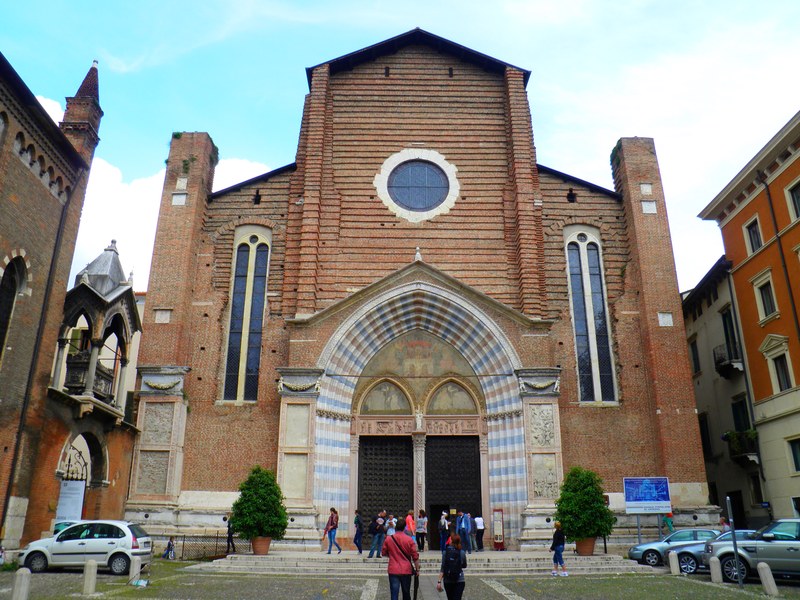
Verona's largest church, a Gothic Dominican basilica begun in 1290 and completed two centuries later. Its interior holds Pisanello's fresco of St George and the Princess — one of the masterpieces of International Gothic painting in Italy.
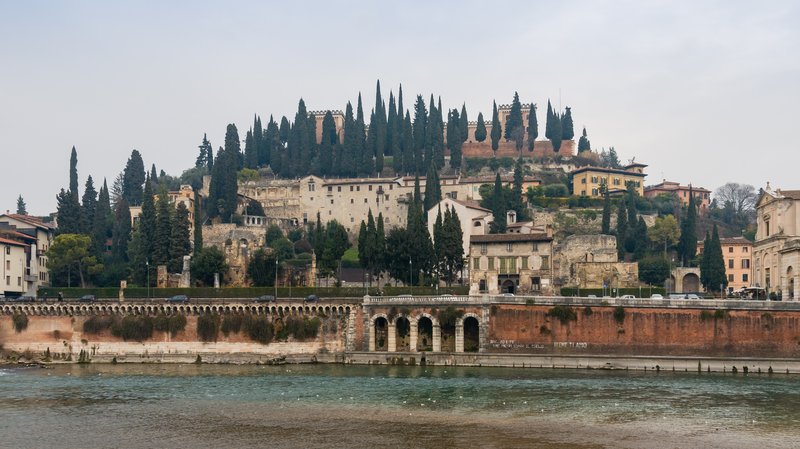
A Roman theatre carved into the hillside above Ponte Pietra in the 1st century BC — the oldest performing arts venue still in use in Italy. The terrace above holds the finest panorama of Verona's rooftops, river bends and the surrounding hills.
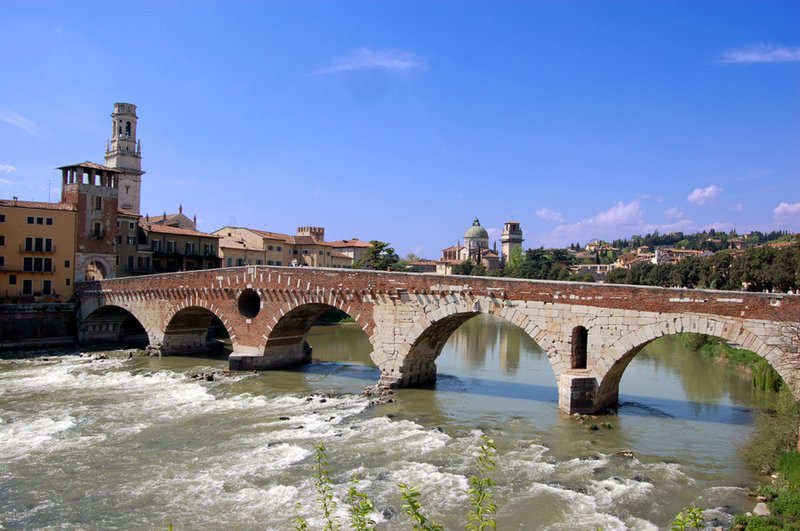
Verona's oldest bridge, a Roman arch span of white stone and red brick crossing the Adige since Roman times. Rebuilt after the war, it frames a classic view back to the Roman theatre and hills.
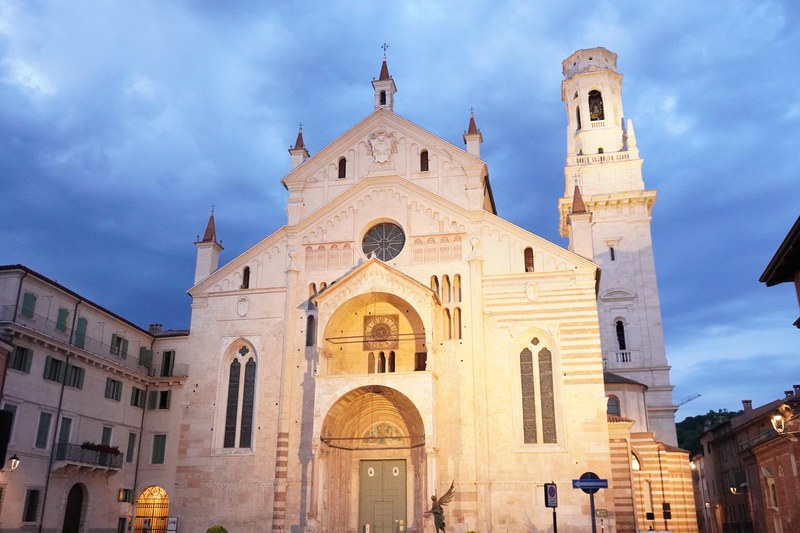
Verona's Romanesque cathedral, flanked by the baptistery of San Giovanni in Fonte and the church of Sant'Elena. Titian's Assumption of the Virgin hangs in the first chapel on the left — one of the most important paintings in the Veneto outside a museum.
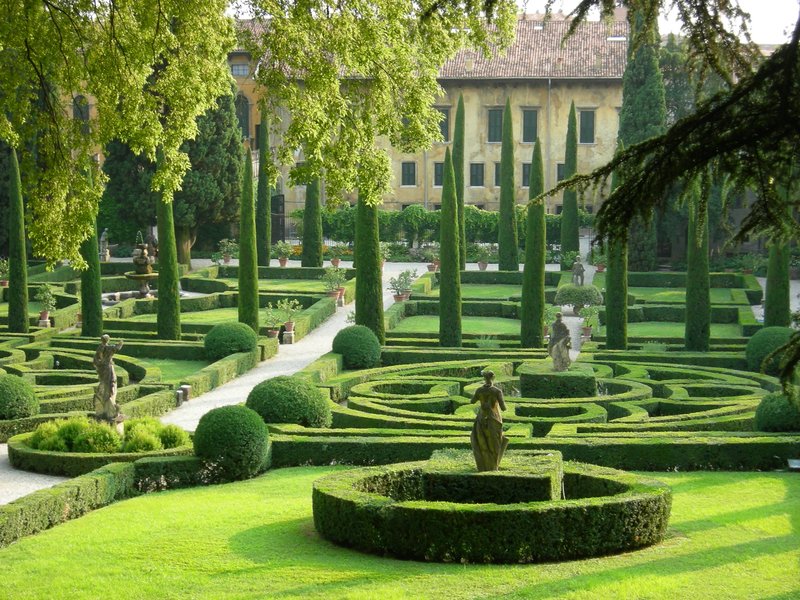
A Renaissance garden laid out in 1570 on the hillside above the Adige, with clipped cypress avenues, grottos and a belvedere at the top. Goethe walked here in 1786 and called it the finest garden he had seen — the view over Verona bears him out.
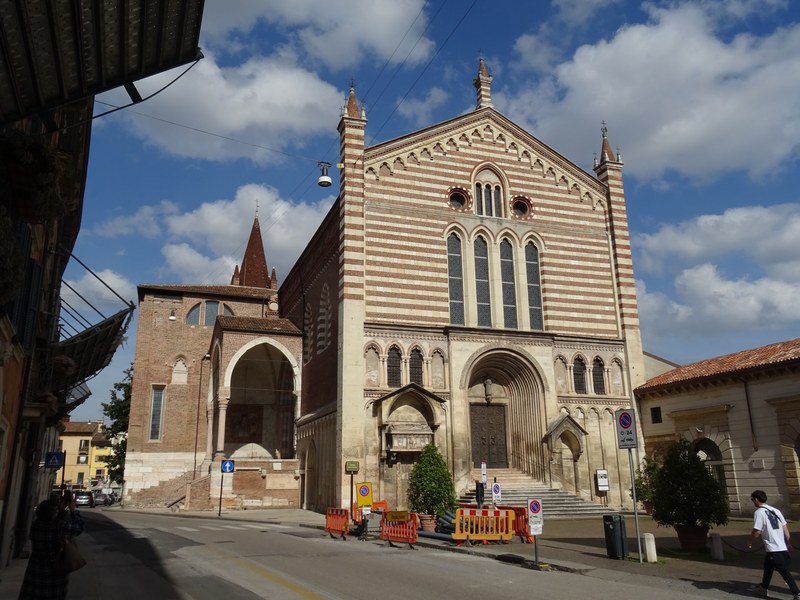
A Romanesque lower church from the 11th century beneath a Gothic upper church from the 14th — two centuries of building layered on top of each other. The upper nave holds Pisanello's Annunciation of 1426, his earliest major surviving work, and the Brenzoni Monument by Florentine sculptor Nanni di Bartolo.
A 17th-century Baroque palace on the north-western corner of Piazza delle Erbe, its roofline crowned by six marble statues of classical deities. The piano nobile holds over 700 works spanning four millennia — Cycladic idols, medieval reliefs, Old Masters and Surrealist canvases in deliberate dialogue.
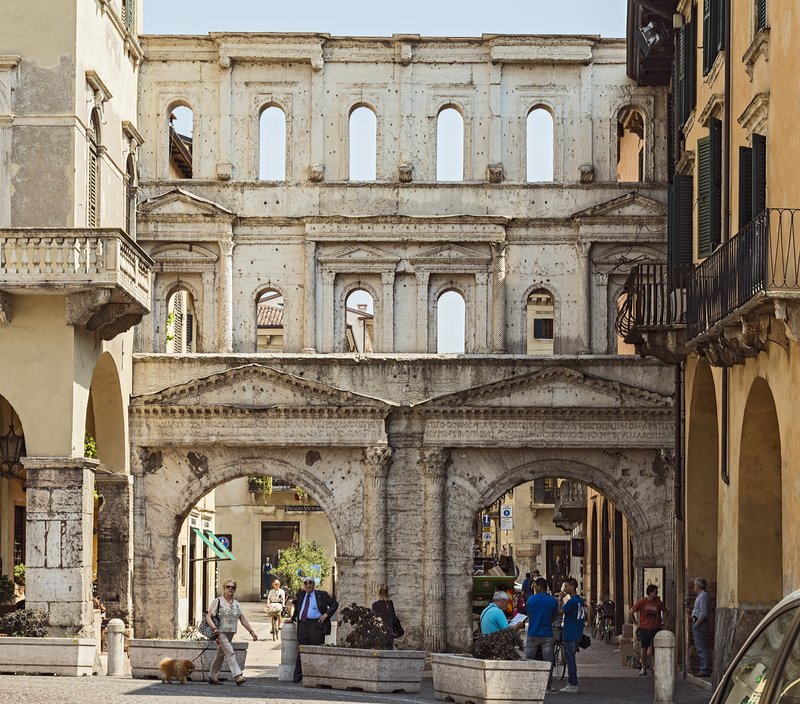
Verona's intact Roman city gate from the 1st century AD, built in white Veronese limestone with two arched carriageways and a double loggia of arched windows above. The Via Postumia — the Roman road connecting Genoa to Aquileia — passed through here, making it the city's most important ancient entrance.
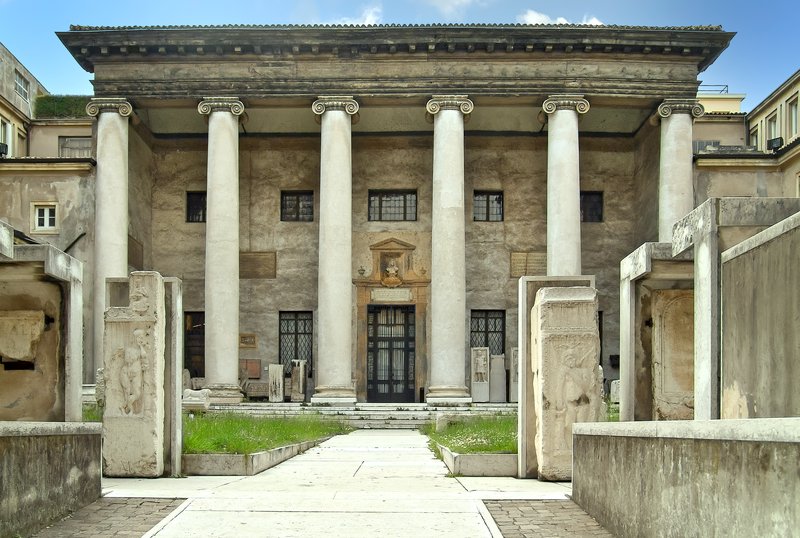
Founded in 1745 by scholar Scipione Maffei, one of the oldest public museums in Europe. Its open courtyard holds hundreds of Greek, Etruscan and Roman inscriptions, sarcophagi and funerary stelae — the collection that drew Goethe in 1786 and helped establish the discipline of epigraphy.
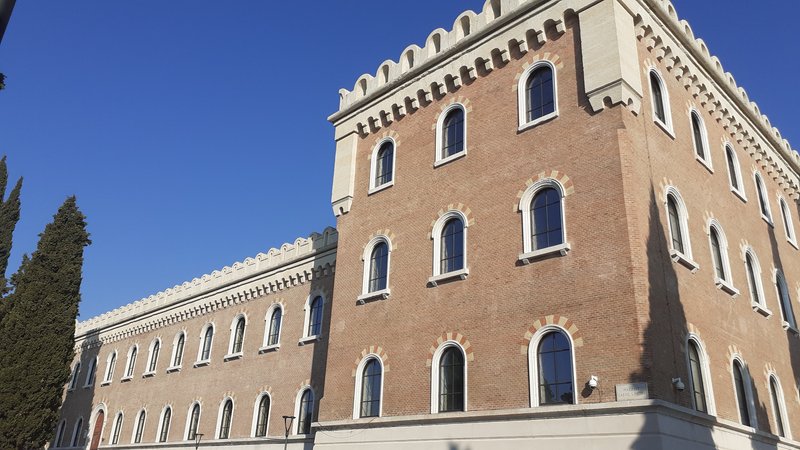
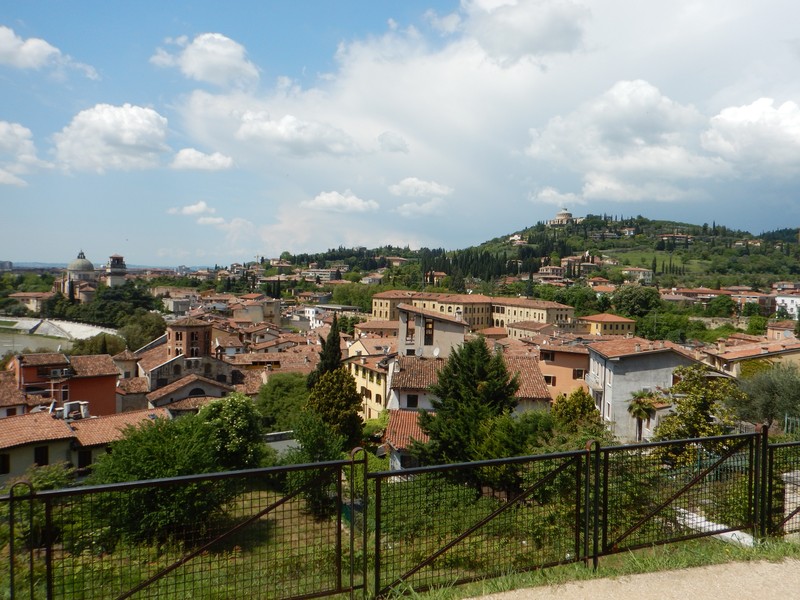
A hilltop barracks built by the Austrians in the 1850s on the site of a Roman and Lombard fortress, now Verona's finest viewpoint over the Adige's horseshoe bend and the terracotta roofline of the old city. A restored funicular climbs the hillside from near Ponte Pietra in about ninety seconds, replacing the switchback stairway.
A Marian sanctuary built directly into the ramparts of Fort San Leonardo, an 1838 Austrian defensive work on the hill above Veronetta. A replica Lourdes grotto sits inside the old fort's vaults, while the terrace outside gives a second, less-crowded panorama over the city than Castel San Pietro's.
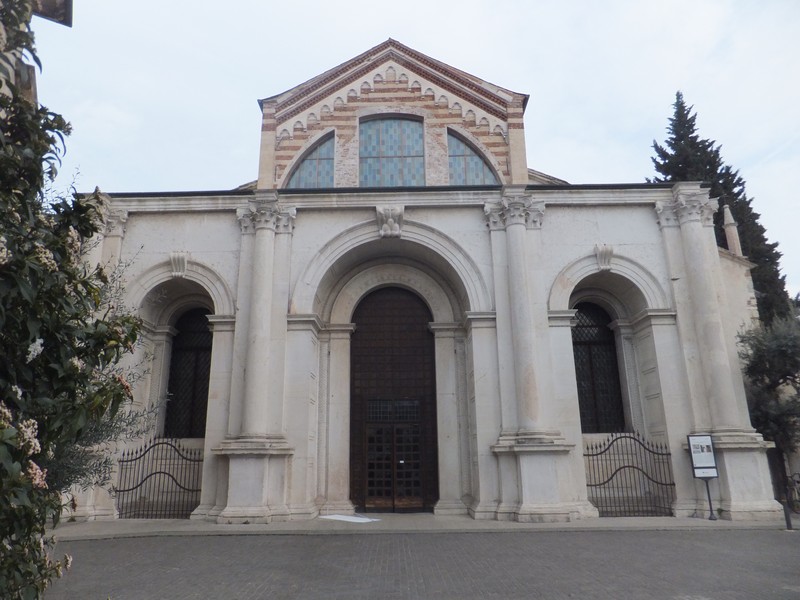
A church founded between the 6th and 8th centuries, rebuilt in Renaissance form with a bell tower completed in 1533. Its plain brick exterior hides Verona's finest wooden intarsia — choir stalls and sacristy cabinets by the monk Fra Giovanni da Verona, inlaid with trompe-l'oeil marquetry scenes of instruments and townscapes.
Founded in 1938 by the Comboni missionaries, a small ethnographic museum on sub-Saharan African life — carved masks, work tools, musical instruments and a reconstructed Tukul ceremonial hut, arranged around the themes of the life cycle, craft and belief that shaped the collection's missionary founders.
7:10am Verona Porta Nuova → 8:30am Venezia Santa Lucia
8:12am Verona Porta Nuova → 9:32am Venezia Santa Lucia
9:10am Verona Porta Nuova → 10:30am Venezia Santa Lucia
ARRIVE Venezia Santa Lucia: 20 min → Piazza San Marco
1.Piazza San Marco~45 min
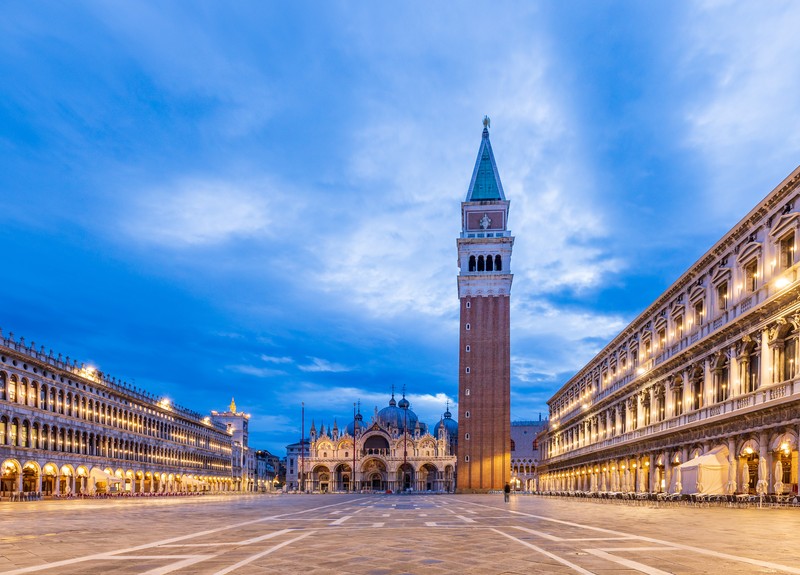
Venice's grand civic square, ringed by the Basilica's five domes, the Campanile bell tower and the arcaded Procuratie buildings — Café orchestras, pigeons and the square's near-daily high-tide flooding — acqua alta — are as much a part of the scene as the five-domed Basilica and the Campanile bell tower ringing it.
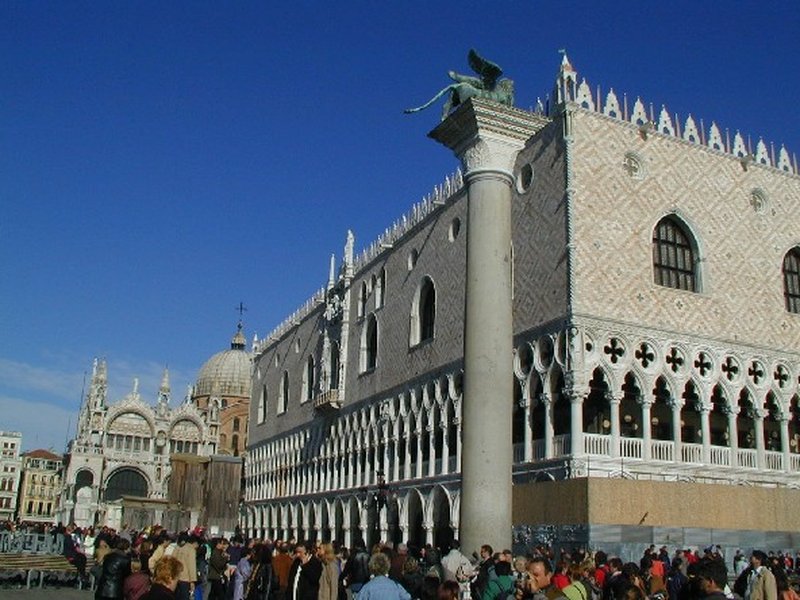
The Venetian Gothic seat of the Doge and the Republic's government for over a thousand years — a pink-and-white marble facade over a colonnade of ogee arches. Inside, the Sala del Maggior Consiglio holds Tintoretto's Paradiso, one of the largest oil paintings in the world, and the Bridge of Sighs connects the palace to the former prisons.
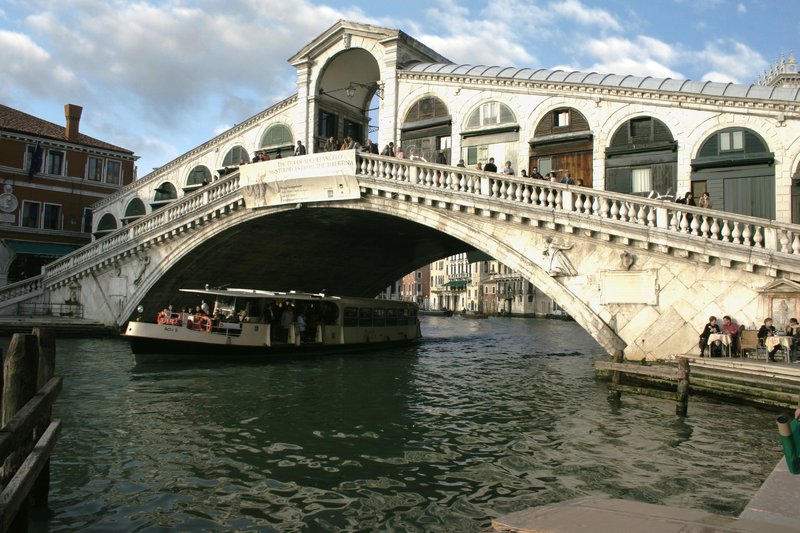
The oldest of the four bridges spanning the Grand Canal, this single stone arch by Antonio da Ponte replaced a collapsed wooden predecessor in 1591, chosen in a design competition over rival proposals. Two rows of shops line the central span, while the side stairs open onto the classic Grand Canal photograph.
A 2-hour small-group walk through Verona's historic centre — the Roman Arena, Juliet's balcony, the Scaligeri tombs, Piazza delle Erbe and the Romanesque streets — with a local guide and a yellow "TOUR" sign for the meet-up.
A 3.5-hour small-group food walk through Verona's markets and old town — tastings of Soave, Amarone and Bardolino wines, local cured meats, cheeses and Veronese specialties, with lunch included for maximum 13 participants.
A full-day small-group minibus trip to Sirmione and Lake Garda — the Roman Grottoes di Catullo, the medieval Scaliger Castle, the spa lake promenade, and open time in Italy's most beautiful lake town, with guide throughout.
A 2-hour small-group walking tour through Verona's history and hidden corners — the Roman Arena, Piazza delle Erbe, Juliet's house, the Scaligeri tombs and the Romanesque streets off the tourist trail, with a local guide.
A 1.5-hour small-group walk through Verona's Romeo and Juliet sites — the balcony, the tomb, the Scaligeri family monuments and the Shakespearean settings — with an engaging local guide bringing the story to life.
A 7.5-hour small-group day to Sirmione and Lake Garda — the Scaliger Castle, the Roman Grottoes, a lake cruise, and free time in Italy's most beautiful lakeside town, with air-conditioned van transport from central Verona.
A 2.5-hour small-group tour with entrance tickets to the Arena di Verona — the ancient Roman amphitheatre still used for summer opera — and Juliet's courtyard, with a Walks In Europe guide and a maximum of 12 participants.
A 3-hour small-group tour with skip-the-line access to the Arena di Verona and Juliet's house — the 1st-century Roman amphitheatre and the medieval courtyard with its famous balcony — with a local guide and maximum 12 participants.
A 7-hour small-group day from Verona to Lake Garda — the Scaliger Castle and Roman Grottoes in Sirmione, plus the medieval watermill village of Borghetto sul Mincio, with maximum 14 participants.
A 1.5-hour small-group walking tour through Shakespeare's Verona — the medieval towers, Juliet's balcony, Piazza delle Erbe and the Scaligeri family monuments — meeting under the equestrian statue on Piazza Bra.
Foreign number: not required. — it signs in with Google, Facebook or email, and a phone sign-up takes any prefix with the code by SMS or WhatsApp.
Glovo is the main on-demand delivery platform in Verona, covering central neighbourhoods and the area around Piazza Bra; the sign-up form takes a country code and the verification SMS arrives on a roaming SIM without issue.
Foreign number: not required. — the account is made with Google, Facebook or an email address — there is no phone field, so no code has to arrive.
Just Eat operates in Verona as a secondary platform to Glovo, with a good selection of pizza, local Italian restaurants, and international options; registration is email-based and a foreign payment card is accepted without issue.
Foreign number: accepted. — the code comes by SMS or WhatsApp, and WhatsApp reaches a foreign number over data; an email code then finishes the sign-up.
appTaxi is Italy's national licensed taxi booking app and the primary option in Verona; it aggregates metered taxis across the city and the sign-up flow accepts a foreign mobile number, with fares using the standard ATCM taxi tariff.
Italy's food capital and Europe's oldest university city — porticoed streets, the leaning towers of Asinelli and Garisenda, and the fresco-covered Basilica di San Petronio.
Verona trades on a love story that never happened — Shakespeare set Romeo and Juliet here without ever seeing the place — yet the city wears the myth so gracefully that it feels true. The real romance is the stone: a Roman arena that still fills with opera under the stars, a Roman bridge rebuilt arch by arch from the river after the war, a market square laid over a forum that has never stopped being the heart of town.
Walk it in a single day and Verona reveals its trick — everything is close, everything overlaps. From the tower you see the whole loop you just walked: the castle on the bend, the amphitheatre's pale ellipse, the red rooftops sliding down to the Adige. Climb down, cross Ponte Pietra at dusk, and the hills above light up gold. No balcony required.